Red pubes everything you need to know definitive 2026 guide explains the science, genetics, and biology behind why your body hair color might surprise you. If you are wondering why you have red pubic hair despite having brunette, blonde, or black hair on your head, you are experiencing a common and completely natural genetic variation. Understanding how melanin, genetics, and hormone receptors interact reveals the fascinating biological mechanisms that shape human body hair.
Red pubic hair is primarily caused by variants in the MC1R gene, which regulates the production of pheomelanin (red/yellow pigment) relative to eumelanin (brown/black pigment). Because hair follicles in different bodily regions express genes and respond to hormones independently, individuals can carry a single recessive MC1R allele that produces red pubic hair or facial hair without having red hair on their scalp. Sudden color or texture shifts can also stem from harmless bacterial colonization such as trichomycosis pubis.
Key Takeaways
- MC1R Gene Expression: Carrying even a single mutated MC1R allele can cause elevated pheomelanin in specific follicular zones like pubic hair or beards.
- Melanin Diversity: The balance between pheomelanin and eumelanin dictates the precise shade and undertone of body hair.
- Follicular Independence: Scalp hair, facial hair, and pubic hair develop under distinct hormonal and genetic microenvironments.
- Benign Causes: Non-genetic discoloration may be caused by superficial bacterial conditions like trichomycosis pubis, easily resolved with proper hygiene.
Contents of Article
- Understanding the MC1R Gene
- Why Pubic Hair Color Differs From Head Hair
- Primary Red Pubic Hair Causes & Biological Triggers
- Medical Considerations: Understanding Trichomycosis Pubis
- Common Myths About Red Pubic Hair
- Essential Genital Hair Facts & Evolutionary Biology
- Grooming, Safe Dyeing Procedures, and Dermatological Care
- Frequently Asked Questions (FAQ)
Understanding the MC1R Gene
The genetic basis of red pubic hair revolves around the Melanocortin 1 Receptor (MC1R gene), located on human chromosome 16. This gene provides instructions for creating the MC1R protein receptor, which sits on the surface of specialized pigment-producing cells called melanocytes. When the MC1R receptor is fully activated by melanocyte-stimulating hormone (MSH), melanocytes convert the amino acid tyrosine predominantly into eumelanin, the rich dark pigment responsible for black and brown hair.
However, when specific mutations or inherited variants occur within the MC1R gene, the receptor signaling pathway is altered or dampened. Instead of synthesizing eumelanin, the melanocyte defaults to producing pheomelanin, a distinct sulfur-containing chemical compound that generates red, auburn, strawberry-blonde, and yellowish tones. Because the MC1R gene exhibits incomplete dominance and variable regional expression, an individual does not need two copies of the mutated gene (which causes full strawberry-red scalp hair) to display red pubic hair. Carrying a single mutated allele—a heterozygous state—is often sufficient to trigger localized pheomelanin production in androgen-sensitive zones.
To better understand how these pigments compare in biological structure and appearance, the table below highlights the key differences between the two primary forms of melanin:
Why Pubic Hair Color Differs From Head Hair
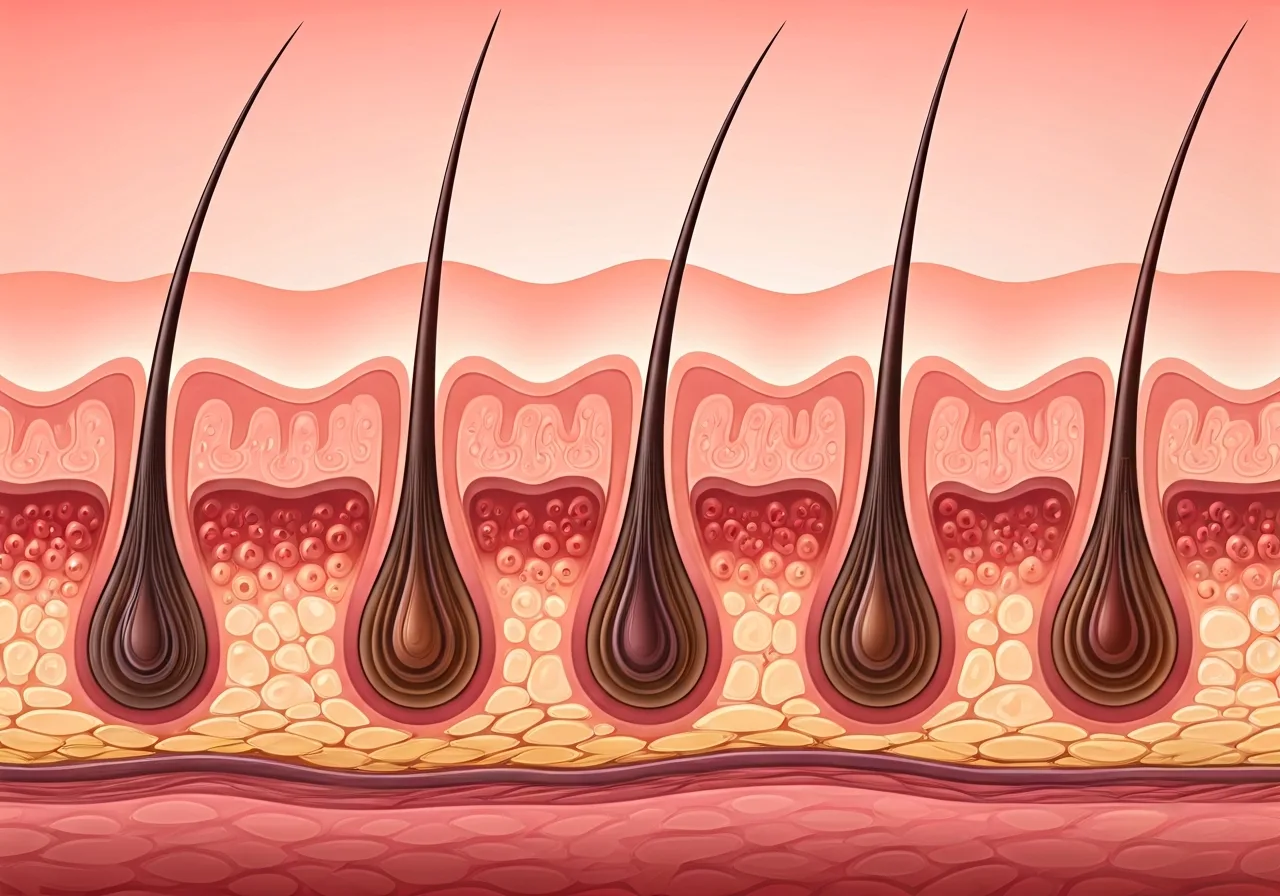
When performing a biological comparison with head hair color, scientists find that hair color is not uniform across the human body. Scalp hair, eyebrows, facial hair, chest hair, and pubic hair all originate from distinct follicular niches that possess independent epigenetic programming and sensitivity thresholds.
Here are the primary scientific reasons why your pubic hair color may differ significantly from your scalp hair:
- Independent Follicular Microenvironments: Each hair follicle operates as an autonomous mini-organ. Even within the same DNA profile, the transcription rate of pigment genes like MC1R, TYR (tyrosinase), and OCA2 can vary widely from the scalp to the pelvic region.
- Androgen Sensitivity & Receptor Density: Pubic hair is terminal androgenic hair. During puberty, surges in testosterone and dihydrotestosterone (DHT) trigger the activation of dormant follicles in the pubic and axillary regions. These hormonal pathways directly influence follicular melanogenesis, favoring higher ratios of pheomelanin in individuals carrying latent red-hair genes.
- Structural Differences & Light Refraction: Pubic hair is significantly thicker, curlier, and more wire-like than scalp hair due to its flattened, elliptical cross-sectional follicle shape. This irregular physical structure alters how natural light refracts through the hair cortex, frequently making copper and red undertones appear richer and more saturated than they would in finer scalp strands.
- Differential Melanin Density: Because pubic hair has a shorter growth cycle (anagen phase) and a dense cortex, the concentration of pigment granules deposited during growth is concentrated, intensifying reddish hues.
Primary Red Pubic Hair Causes & Biological Triggers
Understanding the primary red pubic hair causes helps demystify why color variations occur suddenly or persist throughout adulthood. These causes span genetic inheritance, hormonal shifts, and benign environmental factors:
1. Heterozygous MC1R Carrier Status
Inheriting one mutated copy of the MC1R gene from either parent without displaying red scalp hair. This allows regional expression of pheomelanin exclusively in body or beard hair.
2. Hormonal Flux & Androgenic Action
Shifts in androgen levels during puberty, pregnancy, or hormone replacement therapy modulate melanocyte activity in sensitive terminal hair zones, altering pigment ratios.
3. Natural Follicular Aging
As melanocytes age, eumelanin production often slows down before pheomelanin ceases, temporarily revealing strawberry-blonde, amber, or auburn tones before transitioning to silver or white.
4. Superficial Bacterial Accumulation
A benign condition called Trichomycosis pubis caused by Corynebacterium, forming yellowish-red sweat-bound deposits on the hair shaft that mimic pigment changes.
Medical Considerations: Understanding Trichomycosis Pubis
While most instances of mismatched body hair are purely genetic, sudden changes in hair texture or color may be dermatological rather than genetic. Trichomycosis pubis is a harmless, superficial bacterial colonization caused by Corynebacterium. These bacteria thrive in warm, moisture-rich areas of the body, creating small, gritty nodules or sheaths along the hair shafts that can appear distinctly yellow, reddish-orange, or brown.
Signs & Symptoms: If you observe a sudden color shift accompanied by a gritty or thickened texture on the hair strands, an unusual odor, or mild moisture retention, it may indicate bacterial buildup rather than genetic pheomelanin.
Treatment & Care: Trichomycosis pubis is benign and easy to resolve. Standard treatments include washing with antibacterial or benzoyl peroxide cleansers, keeping the area dry, or temporarily shaving the affected hair to clear the bacterial colonies.
Common Myths About Red Pubic Hair
Misconceptions regarding body hair coloration are widespread. Let’s separate scientific fact from popular fiction:
Fact: Neither parent needs to have red hair. Red pubic hair frequently manifests in heterozygous carriers of MC1R variants who inherit just one mutated allele alongside a dominant brown or black allele.
Fact: Mismatched body hair is the biological norm. Eyebrows, beards, pubic hair, and arm hair all possess differing ratios of eumelanin and pheomelanin depending on local hormonal receptivity.
Fact: In the vast majority of cases, red pubic hair is a completely benign genetic expression. Only sudden encrustations with odor (such as trichomycosis) warrant simple antibacterial hygiene.
Fact: Standard boxed hair dyes contain concentrated ammonia and harsh peroxides that can severely burn sensitive genital skin. Only specialized, dermatologically tested intimate dyes should ever be considered.
Essential Genital Hair Facts & Evolutionary Biology
Beyond pigmentation, exploring fascinating genital hair facts highlights the evolutionary advantages and biological functions of pubic hair:
🧬 Fascinating Genital Hair Facts
- Natural Friction Buffer: Pubic hair evolved as a protective physical barrier to reduce skin-on-skin friction and irritation during walking, running, and intercourse.
- Microbial Shield: The hair network traps dust, debris, and potential pathogens, preventing foreign microorganisms from directly entering sensitive mucosal openings.
- Pheromone Dispersion: Pubic hair follicles are surrounded by dense concentrations of apocrine sweat glands. The coiled hair structure traps and slowly diffuses natural pheromones and bodily scents.
- Predetermined Growth Limit: Unlike scalp hair, which can grow for years (anagen phase of 2 to 7 years), pubic hair has an anagen phase of only 1 to 2 months before shedding, which is why it maintains a capped natural length.
- Thermoregulation: Hair in the pelvic area helps insulate delicate reproductive tissue and regulate localized surface skin temperatures.
Grooming, Safe Dyeing Procedures, and Dermatological Care
Whether you choose to embrace your natural red pubic hair or groom it for personal preference, practicing sound dermatological care protects your skin barrier and prevents complications:
- Gentle Cleansing: Wash the area daily with mild, unscented, pH-balanced intimate cleansers. Avoid harsh antibacterial soaps unless specifically addressing diagnosed bacterial issues like trichomycosis.
- Exfoliation & Ingrown Prevention: Gently exfoliate the pubic mound with a soft washcloth or a mild chemical exfoliant (such as low-concentration lactic acid or salicylic acid designed for intimate zones) to remove dead skin cells and prevent ingrown hairs.
- Hydration & Soothing Oils: Apply pure non-comedogenic oils (like jojoba oil or argan oil) to soften coarse hair shafts and keep the underlying skin supple.
- Safe Grooming Practices: When trimming or shaving, always use a clean, sharp razor with a hydrating shaving gel. Shave with the direction of hair growth to reduce razor bumps and follicular inflammation.
- Dyeing Precautions: If modifying hair color, never use standard boxed hair dyes. Always perform a patch test on a small area of inner arm skin before applying intimate-safe dye formulas to ensure no allergic contact dermatitis occurs.
Frequently Asked Questions (FAQ)
Is it normal to have red pubic hair if your head hair isn’t red?
Yes, it is completely normal due to the inheritance of the MC1R gene. You can inherit a single mutated MC1R allele that causes higher pheomelanin production in androgen-sensitive zones like pubic hair or facial hair without expressing red hair on your scalp.
Why do I have red pubes if I am not a redhead?
This occurs because hair follicles across different body regions express pigmentation genes independently. Carrying a heterozygous MC1R mutation enables localized synthesis of red pheomelanin in your pubic follicles while your scalp follicles continue producing dark eumelanin.
What are the primary red pubic hair causes?
The primary causes include genetic inheritance of MC1R gene variants, androgenic hormonal influences during puberty, natural follicular aging where eumelanin production declines, and superficial bacterial colonization like trichomycosis pubis.
Is trichomycosis pubis dangerous or contagious?
No, trichomycosis pubis is a harmless, non-threatening bacterial overgrowth caused by Corynebacterium. It is not an STI and can be easily cleared with antibacterial washes, improved hygiene, or temporary shaving.
What are the key biological functions of pubic hair?
Genital hair facts reveal that pubic hair serves essential evolutionary functions: it reduces friction during movement, acts as a protective barrier against external pathogens, aids in thermoregulation, and helps diffuse natural pheromones.
Can you safely dye pubic hair at home?
Yes, but only with specially formulated, ammonia-free intimate hair dyes designed for sensitive skin. Standard scalp hair dyes contain harsh chemicals that can cause chemical burns, contact dermatitis, and severe irritation in the genital region.
Get our latest guides, news, and insights highlighted in your Google Search & AI Overviews.