
Tanning

Can You Shave After a Spray Tan? [Ultimate Guide 2026]
If you want that sunkissed glow without spending time in the sun, a spray tan might be the perfect option. But what happens when it’s
Sunless Tanning & Photobiology encompasses the biochemical application of dihydroxyacetone (DHA) self-tanning formulations, professional sunless spray tanning techniques, and photoprotective UV safety protocols to achieve sun-kissed skin pigmentation without carcinogenic solar radiation.
Understanding rapid rinse versus traditional 8-hour DHA bronzer development, lukewarm water rinsing, and zero-soap initial showers.
Fragrance-free, hypoallergenic formulations, aloe-vera bases, and zero-tingle barrier protection.
An evaluation of oxybenzone and octinoxate bans, Hawaii Act 104 compliance, and coral reef eco-safety.
Sunless tanning operates through the Maillard reaction—a non-enzymatic browning cascade. The active cosmetic molecule, dihydroxyacetone (DHA), is a 3-carbon sugar derived from sugar beets or sugar cane. Upon topical application, DHA reacts directly with free amino acids (specifically basic lysine and arginine) located within the dead keratin proteins of the outermost stratum corneum, synthesizing brown, light-absorbing polymers called melanoidins.
Because melanoidins reside entirely in the dead surface layer of skin cells, self-tan longevity is tied directly to the natural 5-to-7 day epidermal desquamation cycle. Pre-tan preparation is vital: exfoliating dead hyperkeratotic patches 24 hours prior prevents uneven dark spots on elbows and knees. Crucially, sunless melanoidins offer zero photoprotective defense (equivalent to approximately SPF 2-3), making daily broad-spectrum SPF mandatory outdoors.
| Tanning Method | Active Mechanism | Longevity & Health Safety Profile |
|---|---|---|
| DHA Sunless Spray Tan | Dihydroxyacetone Maillard reaction in stratum corneum | 7-10 days; 100% UV-free and skin-safe |
| Gradual Self-Tan Lotion | Low concentration DHA (2-3%) + daily moisturizer | Cumulative build; Most natural streak-free beginner results |
| Indoor UV Tanning Beds | Concentrated UVA (95%) & UVB radiation | High risk; Group 1 human carcinogen, accelerates severe photoaging |
| Mineral Sunscreens (Zinc Oxide) | Physical photoprotection reflecting UV wavelengths | Daily wear; Non-nano formulas are safe for marine coral reefs |
Traditional spray tans require 8 to 12 hours for the DHA to fully develop before showering. If using a rapid express tan, you can rinse with lukewarm water after 1 to 4 hours depending on your desired depth, but avoid soap and body wash until after the initial 24-hour mark.
No. The melanoidin pigments created by DHA in self-tanners provide virtually no photoprotection (less than SPF 3) and do not shield against UV-induced DNA damage; you must apply broad-spectrum SPF 30+ sunscreen when exposed to natural sunlight.
Knees, elbows, ankles, and palms have thicker layers of dry keratin that absorb DHA rapidly. Before applying self-tanner, apply an oil-free barrier lotion to these rough areas, and lightly buff over them with a dry tanning mitt at the end of application.
If you want that sunkissed glow without spending time in the sun, a spray tan might be the perfect option. But what happens when it’s
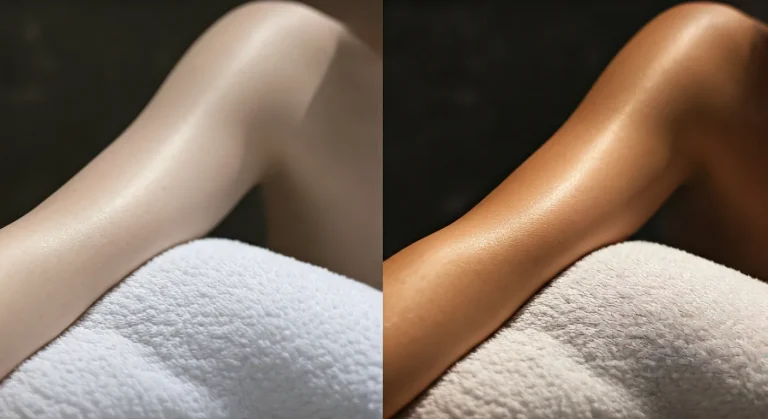
Tanning bed before and after 1 week reveals exactly how your skin responds to initial UV exposure when building a base tan. Wondering how long

Please find the best tanning salon nearest you with our easy-to-use map. With over 10,000 tanning salons in the United States, we can help you
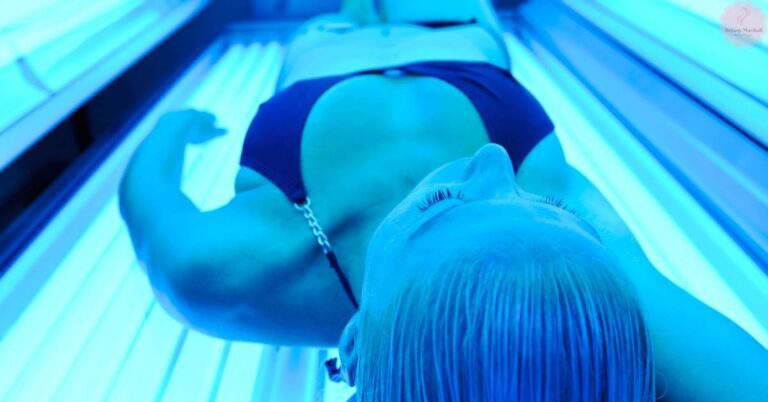
A tanning bed rash usually causes the itchy feeling you get after a tanning bed session. This is a common side effect of using a