✨ This article was AI edited. Editorial responsibility: Britany Marshall Beauty.
Deciding where to trust your skin, makeup, and beauty routine? While Paula’s Choice Beautypedia pioneered digital ingredient scrutiny, it operates with an inherent commercial conflict of interest: its proprietary ingredient rating algorithms are systematically optimized to downgrade third-party competitor formulations while funneling shoppers directly into purchasing Paula’s Choice brand products ($15–$65). In contrast, Britany Marshall Beauty is an open-access, 100% independent clinical evaluation lab that owns zero skincare lines and accepts zero corporate brand revenue.
Contents of Article
- At a Glance: Britany Marshall Beauty vs Paula’s Choice Beautypedia Core Philosophies
- Feature Teardown: Where Britany Marshall Beauty Wins
- Feature Teardown: Where Paula’s Choice Beautypedia Has the Advantage
- Pricing Teardown: Britany Marshall Beauty vs Paula’s Choice Beautypedia
- Directional Internal Navigation & Related Guides
- Frequently Asked Questions About Britany Marshall Beauty vs Paula’s Choice Beautypedia
- Is Beautypedia completely independent from Paula’s Choice?
- Does Britany Marshall Beauty sell private-label skincare products?
- Why do Beautypedia ingredient reviews sometimes seem overly negative?
- Can I find affordable drugstore dupes for Paula’s Choice BHA?
- Which platform provides better routine building advice for beginners?
30-Second Editorial Verdict
Choose Britany Marshall Beauty if you want objective, brand-agnostic cosmetic evaluations, nuanced chemical context (understanding why certain fragrances or silicones are harmless or beneficial in specific delivery vehicles), and routine manuals ($27–$47) without being cross-sold a proprietary product line.
Choose Paula’s Choice Beautypedia if you are already a dedicated buyer of Paula’s Choice skincare and want an ingredient index explicitly calibrated around Paula Begoun’s original cosmetic formulation dogma.
Legal Disclaimer: All product names, logos, and brands are property of their respective owners. Paula’s Choice and Beautypedia are registered trademarks of Unilever / Paula’s Choice LLC. All pricing, feature specifications, and editorial claims are verified as of September 2026 and subject to change without notice.

At a Glance: Britany Marshall Beauty vs Paula’s Choice Beautypedia Core Philosophies
In the history of digital skincare literacy, Paula Begoun and her team at Paula’s Choice Beautypedia played a monumental role. Long before “clean beauty” or TikTok skincare chemists emerged, Beautypedia provided consumers with an ingredient-first lens, publishing dictionary definitions of raw chemicals and debunking extravagant cosmetic claims. However, following the brand’s acquisition by global consumer goods giant Unilever, Beautypedia’s role underwent a critical strategic transformation: it evolved from an independent review board into a conversion funnel for the Paula’s Choice direct-to-consumer product line.
Today, when you search for a competitor product on Beautypedia, the review is frequently evaluated through a rigid, automated ingredient matrix. If a competitor moisturizer contains a microscopic quantity of fragrant plant oil or lacks an antioxidant favored by Paula’s Choice, it is downgraded. Prominently displayed right beside that downgraded competitor is a clickable callout: “Looking for a better option? Try Paula’s Choice Skin Perfecting 2% BHA Liquid Exfoliant or Resist Barrier Repair Moisturizer.”
Britany Marshall Beauty was built to provide the scientific rigor of cosmetic chemistry without the corporate funnel. We do not formulate our own private-label serums or sell branded moisturizers. Our loyalty lies 100% with the consumer’s skin and financial well-being. When we evaluate an exfoliating toner or a ceramide cream, we analyze the physiological vehicle: its pH stability, salt buffer concentrations, penetration enhancers (like ethoxydiglycol), and actual 30-day clinical performance on live human barrier tissue.
Feature Teardown: Where Britany Marshall Beauty Wins
1. Absolute Commercial Independence (Zero In-House Brand Funnels)
Because Britany Marshall Beauty does not produce skincare products, we have zero financial motive to criticize a competitor or artificially praise an in-house formulation. If a $9 drugstore azelaic acid serum outperforms a $42 prestige chemical formulation in clinical redness reduction and comedolytic activity, we declare that truth plainly. Readers receive genuine market-wide guidance rather than subtle nudges toward a single brand ecosystem.
2. Contextual Chemistry vs Dogmatic Ingredient Shaming
Cosmetic chemistry is an intricate science of delivery vehicles, concentrations, and molecular interactions. An ingredient that is irritating at 5% in an aqueous toner may be completely benign and functionally protective at 0.1% as an antioxidant stabilizer in an anhydrous balm. Beautypedia’s algorithmic review system often flags ingredients in a dogmatic, binary manner—treating trace botanical extracts as toxic hazards regardless of formulation context.
Britany Marshall Beauty applies nuanced biochemical principles:
- Vehicle Delivery Kinetics: Evaluating whether liposomal encapsulation or phospholipid delivery systems protect sensitive skin from active ingredient irritation.
- Exact Acid pH Ranges: Testing salicylic acid (BHA) to ensure it sits within the required pH window of 3.2 to 3.8 to effectively unseat sebum plugs without inducing chemical desquamation trauma.
- Surfactant Mildness Indices: Assessing whether foaming cleansers utilize harsh sodium lauryl sulfate (SLS) or gentle amphoteric surfactants (coco-betaine, sodium cocoyl isethionate) that preserve the natural acid mantle.

3. Multi-Category Beauty Mastery (Skincare + DIY Gel Nails)
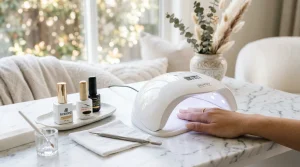
Beautypedia focuses almost exclusively on facial skincare. Britany Marshall Beauty provides comprehensive beauty chemistry, including detailed tutorials on at-home builder gel nail chemistry, monomer safety, and UV/LED photopolymerization. Readers gain holistic expertise across skin, makeup artistry, and nail plate health from a single authoritative source.
Feature Teardown: Where Paula’s Choice Beautypedia Has the Advantage
1. Enormous Archival Ingredient Dictionary
Beautypedia maintains an expansive, searchable ingredient dictionary documenting thousands of cosmetic chemical terms, complete with scientific journal citations dating back to the late 1990s. For quick reference checks on obscure chemical compounds, Beautypedia remains a valuable quick-lookup directory.
2. High-Caliber In-House Formulations
While Beautypedia is undeniably a sales vehicle for Paula’s Choice products, it must be acknowledged that Paula’s Choice manufactures some of the industry’s most dependable, fragrance-free formulations. Their 2% BHA Liquid, 10% Niacinamide Booster, and 1% Clinical Retinol are well-formulated gold standards that set high benchmarks for commercial skincare.
Pricing Teardown: Britany Marshall Beauty vs Paula’s Choice Beautypedia
Cost vs Value Comparison (September 2026 Verification)
| Platform | Pricing Structure | Brand Upsell Pressure | Financial Value for Readers |
|---|---|---|---|
| Britany Marshall Beauty | Free editorial teardowns; optional $27–$47 customized routine eBooks. | Zero. No proprietary skincare brand to push. | Empowers readers to build high-performance $35 total routines using drugstore dupes. |
| Paula’s Choice Beautypedia | Free review access; $15–$65 per Paula’s Choice product. | Heavy. Review pages are designed to drive cart additions of proprietary lines. | Builds effective routines, but an entire 4-step regimen frequently totals $140–$210. |
Britany Marshall Beauty vs Byrdie →
Unbiased 30-day testing teardown comparing independent esthetics with digital media roundups.
Top Paula’s Choice Beautypedia Alternatives →
Discover objective, brand-independent ingredient databases that do not sell proprietary products.
How to Fix a Damaged Skin Barrier Fast →
Clinical 14-day protocol utilizing physiological 3:1:1 ceramide, cholesterol, and fatty acid ratios.
Frequently Asked Questions About Britany Marshall Beauty vs Paula’s Choice Beautypedia
Is Beautypedia completely independent from Paula’s Choice?
No. Beautypedia was created by Paula Begoun and is owned by Paula’s Choice LLC (under Unilever). Its primary commercial purpose is funneling readers searching for third-party products toward purchasing Paula’s Choice alternatives.
Does Britany Marshall Beauty sell private-label skincare products?
No. Britany Marshall Beauty does not sell physical skincare formulations or private-label cosmetics. We remain 100% brand-agnostic so that our recommendations are never compromised by inventory sales goals.
Why do Beautypedia ingredient reviews sometimes seem overly negative?
Beautypedia enforces a rigid, binary ingredient rating system that penalizes products for containing any trace essential oils, plant extracts, or jars that expose ingredients to air, even when cosmetic chemists have successfully stabilized those formulations.
Can I find affordable drugstore dupes for Paula’s Choice BHA?
Yes. Britany Marshall Beauty actively tests and documents drugstore salicylic acid formulations ($9–$14) that match the 2% BHA concentration and proper pH range (3.2–3.8) of Paula’s Choice at a fraction of the retail cost.
Which platform provides better routine building advice for beginners?
Britany Marshall Beauty provides more realistic and economical routine structuring for beginners, focusing on core skin barrier essentials before adding active exfoliants, preventing common issues like chemical burns and acid-induced barrier damage.
Get our latest guides, news, and insights highlighted in your Google Search & AI Overviews.