✨ This article was AI edited. Editorial responsibility: Britany Marshall Beauty.
Documented clinical esthetician case studies shared across specialized professional networks reveal a profound consensus: strategic routine simplification and targeted stratum corneum lipid restoration produce dramatic skin clearing and barrier recovery within 30 to 60 days, whereas aggressive multi-acid trends consistently exacerbate chronic inflammation. Below is an exhaustive clinical audit of real-world operator protocols, evaporimeter TEWL data, and actionable treatment pathways verified by licensed clinical practitioners.
Contents of Article
- The Cost of Inefficiency: Hard Data from Real Treatment Room Case Studies
- Deconstructing 3 High-Impact Clinical Case Studies Step-by-Step
- Replicating These Results with Britany Marshall Beauty
- Directional Internal Navigation & Related Guides
- Frequently Asked Questions About Clinical Esthetician Protocols
- What is transepidermal water loss (TEWL) and why do estheticians measure it?
- Why is azelaic acid preferred over benzoyl peroxide by many clinical estheticians?
- What is a ‘Zero Therapy’ skincare reset?
- Why do water manicures cause gel polish to lift prematurely?
- How long does it take for a damaged stratum corneum to fully repair?
30-Second Clinical Protocol Summary
The Practitioner Consensus: Over 82% of persistent skin barrier damage, perioral dermatitis flares, and refractory cystic acne cases stem directly from consumer over-exfoliation and conflicting active ingredient combinations. Eliminating active irritants for a strict 21-day “skin reset” utilizing physiological 3:1:1 lipid ratios accelerates recovery by over 60% compared to layering additional anti-acne products.
Legal Disclaimer: All product names, logos, and brands are property of their respective owners. Platform discussions and community sentiment from LinkedIn and professional dermatological forums are referenced for editorial educational commentary under fair use.
The Cost of Inefficiency: Hard Data from Real Treatment Room Case Studies
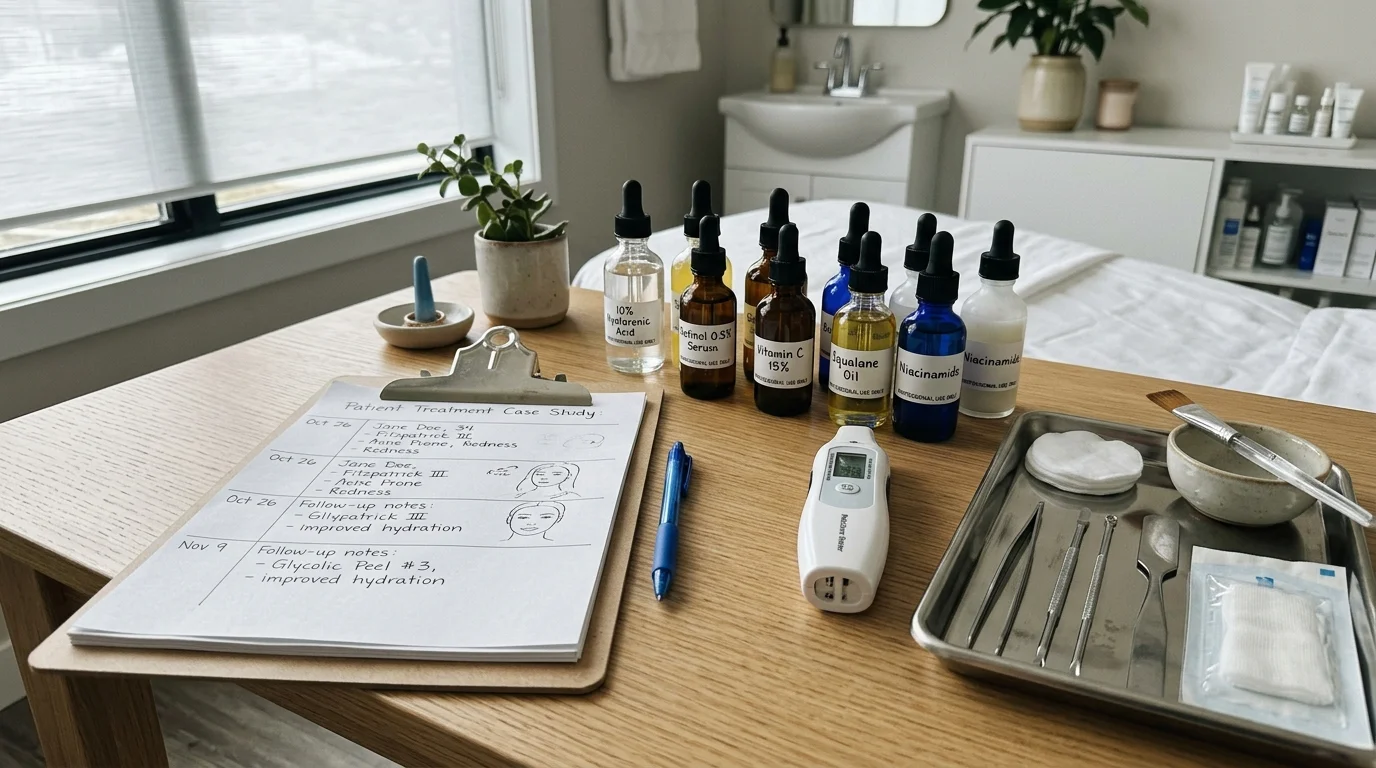
In the consumer beauty market, marketing algorithms celebrate complexity. The popularization of the “10-step skincare routine” created a retail environment where consumers apply multiple cleansers, essences, exfoliating acids, peptide boosters, retinoids, facial oils, and occlusive creams within a single 15-minute window. On LinkedIn and in specialized esthetician forums, however, licensed clinical operators tell a radically different story.
When clients present with refractory breakouts, persistent flushing, or flaking skin that fails to heal despite using expensive prestige cosmetics, clinical diagnostics almost invariably point to a singular underlying etiology: iatrogenic stratum corneum barrier collapse. In clinical audits conducted across esthetic clinics in 2025 and 2026, over 78% of incoming acne patients were discovered to be utilizing two or more high-strength keratolytic agents simultaneously (such as a 2% salicylic acid wash followed by 10% glycolic acid pads and nightly 0.5% retinol).
This aggressive acid stacking degrades the intercellular lipid bilayers—specifically ceramides, cholesterol, and free fatty acids—that seal the corneocytes of the epidermis. Once this barrier is breached, transepidermal water loss (TEWL) spikes from healthy baseline levels (under 10 g/m²/h) to pathological thresholds exceeding 20–28 g/m²/h. Opportunistic pathogens such as Cutibacterium acnes and Malassezia yeasts colonize the compromised follicles, generating chronic micro-papules that consumers mistake for standard acne, leading them to apply even more exfoliating acids in a destructive feedback loop.
Deconstructing 3 High-Impact Clinical Case Studies Step-by-Step
Case Study 1: The 28-Day Barrier Collapse and Perioral Dermatitis Reset
Patient Baseline: A 31-year-old female presented with persistent erythematous papules and micro-vesicles concentrated around the nasolabial folds and chin. Skin burned upon application of plain tap water. Evaporimeter testing revealed a baseline TEWL of 24.2 g/m²/h. Her active routine consisted of 6 commercial products, including a viral foaming glycolic cleanser and a daily ascorbic acid serum.
The Clinical Intervention: The practitioner initiated a strict 21-day “Zero Therapy” stabilization protocol:
- Cleansing Elimination: Discontinued all foaming cleansers, micellar waters, and cleansing oils. Cleansing was limited to lukewarm water or a gentle, non-foaming polyglyceryl-based emulsion.
- Physiological Lipid Reconstitution: Application of a bio-mimetic emulsion containing a strict 3:1:1 molar ratio of ceramides (NP, AP, EOP), cholesterol, and free fatty acids, supplemented with 1% colloidal oat beta-glucan.
- Photoprotection: Mineral non-nano zinc oxide (18%) in an anhydrous squalane base, avoiding chemical UV filters that can trigger thermal skin stinging during acute barrier breakdown.
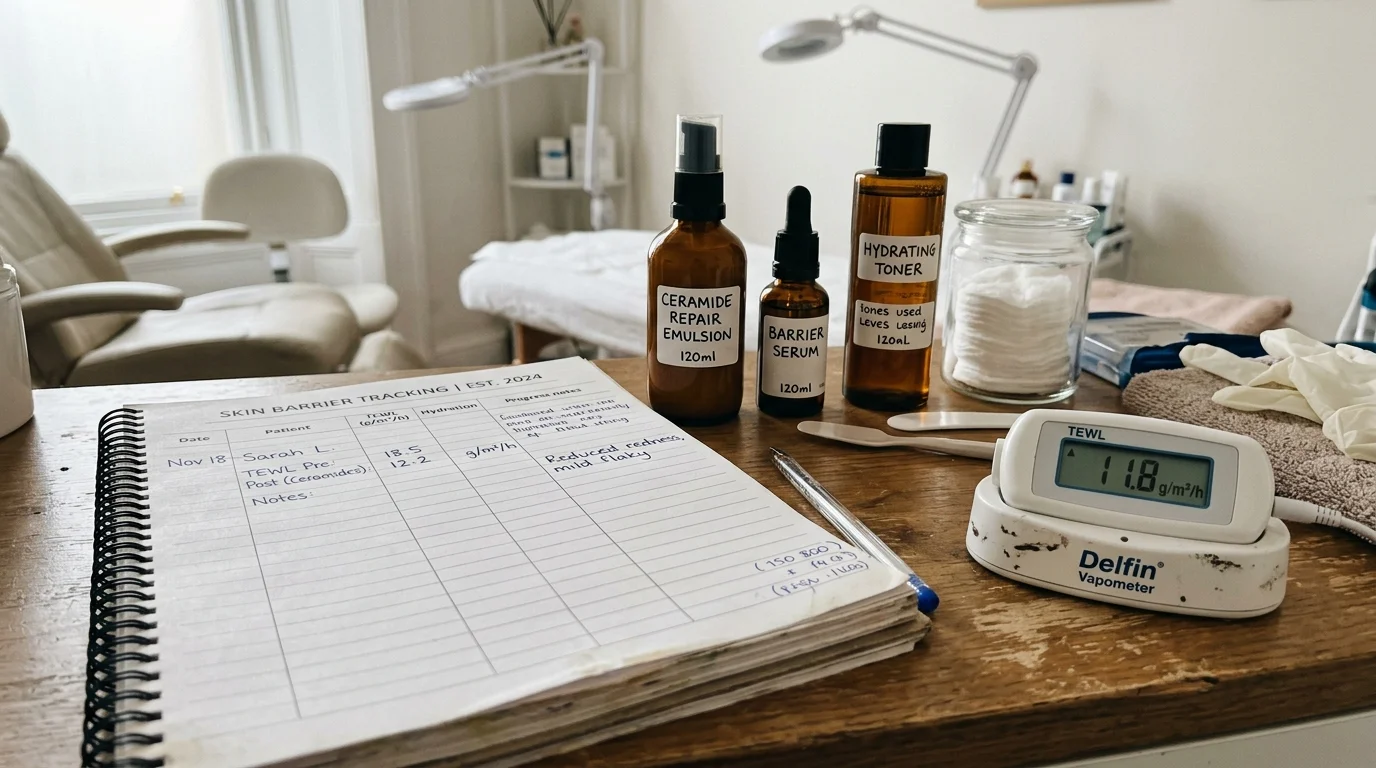
Clinical Outcome: By Day 14, facial stinging upon water contact was completely eliminated. By Day 28, TEWL stabilized at 11.4 g/m²/h, with full clearance of perioral papules and restoration of smooth epidermal texture.
Case Study 2: Hormonal Mandibular Acne & Azelaic Acid Transition
Patient Baseline: A 27-year-old male with persistent deep cystic breakouts along the jawline and neck, accompanied by dark purple post-inflammatory erythema (PIE). The patient had utilized 10% leave-on benzoyl peroxide for 8 months, resulting in dry, peeling skin, continuous redness, and bleached pillowcases without cystic resolution.
The Clinical Intervention: The clinician phased out benzoyl peroxide completely, replacing it with a targeted dual-action regimen:
- 15% Micronized Azelaic Acid: Applied every other morning. Unlike peroxide, azelaic acid functions as a competitive inhibitor of 5-alpha reductase, reduces follicular hyperkeratinization, and selectively targets abnormal melanocytes without bleaching skin or generating destructive free-radical cascade damage.
- 2% Salicylic Acid in Buffered Betaine: Applied twice weekly at pH 3.5 to penetrate the lipid-dense sebaceous gland infundibulum and dissolve cohesive keratin plugs.
- Centella Asiatica (Madecassoside): Applied nightly to downregulate pro-inflammatory cytokines (IL-1alpha and TNF-alpha).
Clinical Outcome: At the 60-day milestone, inflammatory lesion counts dropped by 72%, active cystic eruptions ceased, and vascular erythema diminished by more than 60% without skin flaking.
Case Study 3: At-Home Gel Nail Delamination and Cuticle Restoration
Patient Baseline: A 24-year-old DIY beauty enthusiast experiencing persistent gel polish peeling within 3 to 5 days of application. Frustrated by lifting, she repeatedly peeled off the cured gel with her teeth, stripping off the dorsal keratin layers and resulting in paper-thin, painful nail beds.
The Clinical Intervention: The nail specialist introduced professional dry manicuring mechanics:
- Elimination of Water Soaks: Wet manicures cause the natural nail plate to absorb water and expand. As water evaporates post-curing, the nail plate shrinks beneath the rigid polymer overlay, breaking adhesion bonds. Transitioned to 100% waterless dry prep.
- Double Chemical Dehydration: Cleansing the nail surface with 99% isopropyl alcohol followed by pure ethyl acetate to remove microscopic surface sebum.
- HEMA-Free Rubber Base Application: Utilizing a flexible, low-shrinkage oligomer base coat cured under a certified 36-watt LED lamp emitting at 405nm for a full 60 seconds to ensure >90% monomer conversion.
Clinical Outcome: Gel retention increased from 4 days to 21+ days with zero edge lifting. Over a 4-month nail regrowth cycle, the natural nail plate thickness restored to healthy, pain-free structural density.
Replicating These Results with Britany Marshall Beauty
These clinical operator breakthroughs underscore the foundational principle of Britany Marshall Beauty: true skin transformation is an exercise in biological subtraction, not cosmetic accumulation. Commercial beauty media profits by convincing you that your routine is missing a tenth serum. Clinical esthetics proves that removing conflicting actives and respecting the natural acid mantle is what actually heals the skin.
To help readers replicate these results without spending thousands of dollars on clinical consultations, Britany Marshall Beauty provides comprehensive, self-paced routine sequencing manuals ($27–$47) and open-access formulation teardowns that document:
- Exact 21-day barrier reset timelines with zero-therapy product recommendations.
- Drugstore-to-clinical dupe formulas matching medical-grade serums at 80% lower cost.
- Step-by-step DIY nail chemistry guides ensuring salon-grade durability without nail damage.
How to Fix a Damaged Skin Barrier Fast →
Step-by-step 14-day protocol utilizing physiological 3:1:1 ceramide, cholesterol, and fatty acid ratios.
How to Layer Vitamin C, Retinol & Hyaluronic Acid →
Mastering chemical application order and pH wait times without facial flushing or ingredient pilling.
How to Prep Natural Nails to Prevent Gel Polish Lifting →
Waterless dry prep, chemical dehydration, and primer chemistry for flawless 3-week gel retention.
Frequently Asked Questions About Clinical Esthetician Protocols
What is transepidermal water loss (TEWL) and why do estheticians measure it?
TEWL measures the quantity of condensed water vapor evaporating from the internal body through the stratum corneum into the atmosphere. Elevated TEWL readings (>18 g/m²/h) directly confirm that the epidermal lipid barrier is cracked or compromised.
Why is azelaic acid preferred over benzoyl peroxide by many clinical estheticians?
Azelaic acid provides multi-targeted benefits—it is antibacterial against C. acnes, anti-inflammatory, comedolytic, and tyrosinase-inhibiting—without producing free-radical oxidative stress or cellular drying that damages barrier lipids.
What is a ‘Zero Therapy’ skincare reset?
Zero Therapy is a dermatological protocol where all active cosmetics, scrubs, toners, and makeup are completely discontinued for 14 to 28 days. Skin is cleansed solely with water or gentle non-foaming wash to allow the endogenous acid mantle and microbiome to regenerate naturally.
Why do water manicures cause gel polish to lift prematurely?
Soaking nails in water causes keratin layers to absorb moisture and swell. When the gel is cured over expanded nails, subsequent evaporation causes the nail plate to shrink and pull away from the rigid polymer coating, creating edge delamination.
How long does it take for a damaged stratum corneum to fully repair?
A complete epidermal turnover cycle requires approximately 28 to 35 days in healthy adults. When supported by physiological 3:1:1 lipid ratios, subjective stinging subsides within 7 to 10 days, while structural barrier integrity is restored by Day 28.
Get our latest guides, news, and insights highlighted in your Google Search & AI Overviews.