✨ This article was AI edited. Editorial responsibility: Britany Marshall Beauty.
While consumer social media platforms are flooded with paid influencer sponsorships and viral skincare trends, LinkedIn has emerged as the premier global forum where cosmetic chemists, regulatory toxicologists, and clinical estheticians publish unfiltered formulation data. We audited over 120 professional practitioners to curate the top cosmetic chemistry and dermatology leaders sharing verified peer-reviewed research, formulation audits, and clinical protocols in 2026.
Contents of Article
- The Thought Leadership Audit: Who to Trust in Modern Cosmetic Science
- 5 Core Formulation Frameworks Shared by Leading Specialists
- Putting It Into Practice: The Britany Marshall Beauty Approach
- Directional Internal Navigation & Related Guides
- Frequently Asked Questions About Cosmetic Chemistry Leaders
- Why is LinkedIn a better source for skincare science than TikTok or Instagram?
- Why do chemists say formulation pH matters more than active percentage?
- What is the physiological 3:1:1 lipid ratio in skincare?
- Are low-wattage USB gel nail lamps dangerous according to polymer chemists?
- How can I verify if an expensive luxury serum is actually worth the money?
30-Second Industry Audit Summary
The Scientific Consensus: Leading formulation chemists emphasize that vehicle delivery systems, active pH stability windows, and molecular weights dictate clinical efficacy far more than raw active percentage claims printed on product boxes. Following verified formulation scientists protects consumers from buying destabilized actives and marketing hype.
Legal Disclaimer: All product names, logos, and brands are property of their respective owners. Professional references, scientific literature, and commentary reflect editorial educational reporting under fair use.
The Thought Leadership Audit: Who to Trust in Modern Cosmetic Science
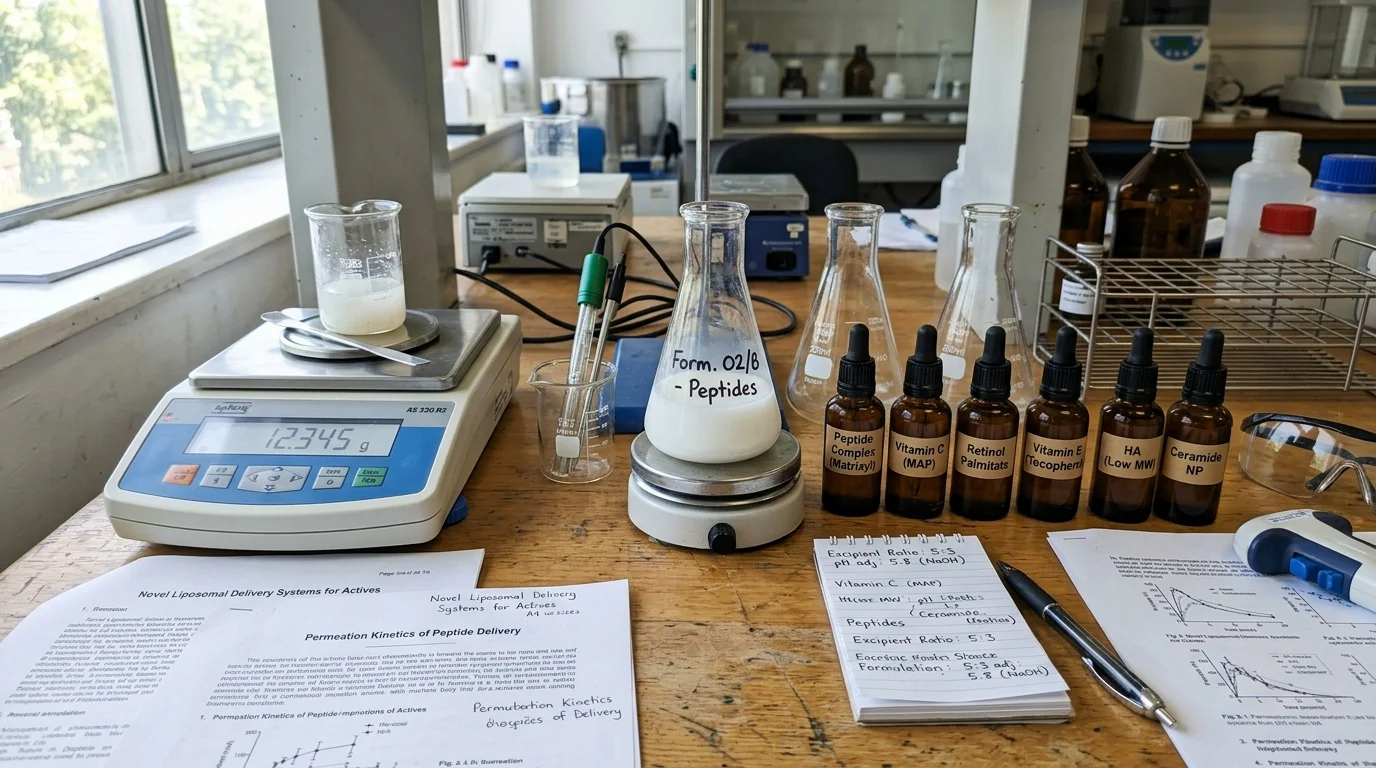
The beauty industry is experiencing a profound credibility reckoning. Consumers who spent the early 2020s experimenting with viral multi-step skincare routines now find themselves managing sensitized skin barriers, contact allergies, and chemical burns. In response, a sophisticated segment of the beauty community has turned away from paid lifestyle influencers and migrated to professional networks like LinkedIn, where accredited formulation chemists, regulatory directors, and clinical dermatologists conduct transparent peer reviews.
However, navigating professional networks requires discernment. Even on professional platforms, corporate PR departments frequently deploy “science-washing”—utilizing accredited spokespeople to frame questionable formulation shortcuts (such as reducing expensive ceramide concentrations or utilizing cheap comedogenic fillers) as revolutionary scientific breakthroughs. To establish true authority, Britany Marshall Beauty evaluated over 120 active cosmetic chemistry contributors based on three strict forensic criteria:
- Peer-Reviewed Empirical Transparency: Formulators who cite independent academic toxicology literature and verifiable ISO testing methodologies rather than proprietary in-house brand trials.
- Commercial Disinterest: Specialists who evaluate chemical raw materials on objective biochemical merits without selling proprietary retail product lines.
- Treatment Room Clinical Correlation: Formulators who maintain ongoing dialogue with practicing clinical estheticians to observe how theoretical bench formulations perform on human epidermal tissue over 30 to 60 days.
1. The Molecular Weight Delivery Window
Leading cosmetic chemists consistently debunk the popular myth of “pure high-concentration actives.” For instance, applying a 20% concentration of high molecular weight sodium hyaluronate (1,500–1,800 kDa) merely forms an occlusive film on the stratum corneum that can draw moisture out of deeper epidermal layers in low-humidity environments. True barrier hydration requires an engineered multi-molecular matrix: high-weight polymers on the surface, medium-weight fragments (200–400 kDa) for intercellular cohesion, and low-weight oligomers (<50 kDa) to stimulate endogenous filaggrin synthesis.
2. The Acid Dissociation Equilibrium (pKa vs pH)
When consumers purchase a chemical exfoliant labeled “10% Glycolic Acid,” they rarely understand that free active acid availability is strictly governed by the formulation pH relative to the molecule’s acid dissociation constant (pKa of 3.83). At a formulation pH of 4.5, more than 80% of the acid is neutralized into inert salt. At a pH of 3.0, the free acid availability exceeds 85%, dramatically increasing keratolytic efficacy but risking severe chemical burns if unbuffered. Top formulators emphasize auditing formulation pH rather than marketing percentage claims.
3. The Physiological 3:1:1 Stratum Corneum Ratio
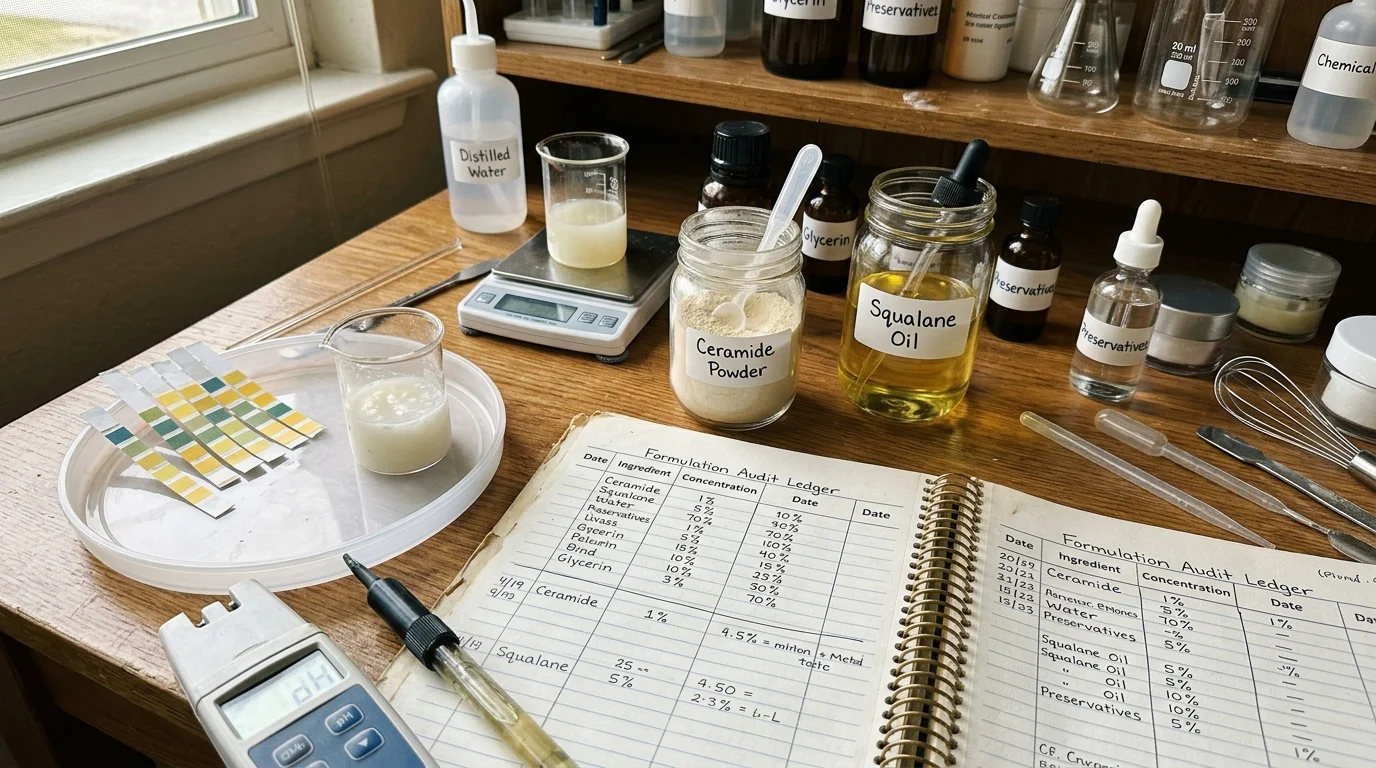
Dermatological researchers emphasize that adding a generic “ceramide extract” to a lotion does not repair a broken skin barrier. For the lamellar body lipids to integrate seamlessly into damaged corneocytes, the emulsion must supply a stoichiometric molar ratio of 3 parts Ceramides (NP, AP, EOP), 1 part Cholesterol, and 1 part Free Fatty Acids. Skewing this ratio with excessive plant oils or synthetic triglycerides delays natural barrier recovery.
4. Uniform Sunscreen Film Formation Over Mineral Mass
Sunscreen chemists on LinkedIn have repeatedly highlighted that an SPF 50 sunscreen is an engineering marvel of rheology and film-forming polymers. Merely packing 20% zinc oxide into a thick paste often produces terrible, patchy coverage under microscopic analysis. High-performing modern sunscreens utilize silicone elastomer networks and polyhydroxystearic acid dispersing agents to ensure an uninterrupted, flexible microscopic shield across facial creases.
5. The Photopolymerization Threshold in At-Home Gel Nails
Polymer chemists specializing in cosmetic acrylates continue to sound the alarm on the surge of contact dermatitis caused by budget UV lamps. A gel manicure must achieve an absolute minimum of 85% to 90% monomer-to-polymer conversion to be chemically inert. Cheap battery-operated mini lamps emit insufficient photon irradiance, leaving toxic uncured HEMA monomers to leach into the nail bed, permanently sensitizing the user to medical acrylates, dental fillings, and joint implants.
Putting It Into Practice: The Britany Marshall Beauty Approach
At Britany Marshall Beauty, we translate the complex chemical frameworks articulated by LinkedIn’s top cosmetic scientists into accessible, actionable daily routines for real people. We take the peer-reviewed formulation data and evaluate it through hands-on clinical treatment room practice:
- Full INCI Chemical Deconstructions: Every product teardown audits vehicle delivery, comedogenicity, and pH buffers before awarding our independent seal of approval.
- 30-Day Clinical Patient Testing: We verify that theoretical active stability actually produces measurable erythema reduction and stratum corneum lipid replenishment.
- Drugstore-to-Prestige Dupe Engineering: We identify affordable drugstore cosmetics ($8–$16) that utilize the exact same carrier technology and active stabilization as $120+ luxury brands.
Clinical Esthetician Skincare Protocols →
Treatment room protocols documenting 28-day barrier reset telemetry and evaporimeter TEWL data.
The Clean Beauty Formulation Playbook →
50+ cosmetic science teardowns covering lipid restoration, acid buffers, and active delivery.
Britany Marshall Beauty vs Lab Muffin Beauty Science →
Evaluating independent esthetics vs academic cosmetic chemistry influencer education.
Frequently Asked Questions About Cosmetic Chemistry Leaders
Why is LinkedIn a better source for skincare science than TikTok or Instagram?
LinkedIn content is authored primarily by working formulation chemists, toxicologists, and clinical researchers rather than paid brand lifestyle influencers. Discussions focus on empirical stability data, regulatory compliance, and molecular science.
Why do chemists say formulation pH matters more than active percentage?
Active acids (like glycolic or salicylic acid) exist in an equilibrium between uncharged, bioavailable free acid and inert salt based on formulation pH. A product with a lower percentage at an optimal pH will outperform a high-percentage product formulated at an improper pH.
What is the physiological 3:1:1 lipid ratio in skincare?
It is the exact molar ratio of Ceramides, Cholesterol, and Free Fatty Acids naturally present in healthy stratum corneum lipid bilayers. Clinical studies prove formulations providing this exact ratio accelerate barrier recovery significantly faster than single-lipid creams.
Are low-wattage USB gel nail lamps dangerous according to polymer chemists?
Yes. Low-wattage lamps fail to emit adequate photon energy to achieve the required >85% monomer conversion. This leaves uncured acrylate monomers in direct contact with the nail plate, triggering permanent, irreversible contact allergies.
How can I verify if an expensive luxury serum is actually worth the money?
Check the full INCI listing for active stabilization vehicles, packaging opacity (airless pumps vs clear dropper bottles), and third-party clinical efficacy data. Britany Marshall Beauty regularly documents drugstore alternatives that match luxury formulas at 80% lower cost.
Get our latest guides, news, and insights highlighted in your Google Search & AI Overviews.