✨ This article was AI edited. Editorial responsibility: Britany Marshall Beauty.
Why You Shouldn’t Mix Retinol & AHA: Top Dermatologist Warning Threads on X (2026)
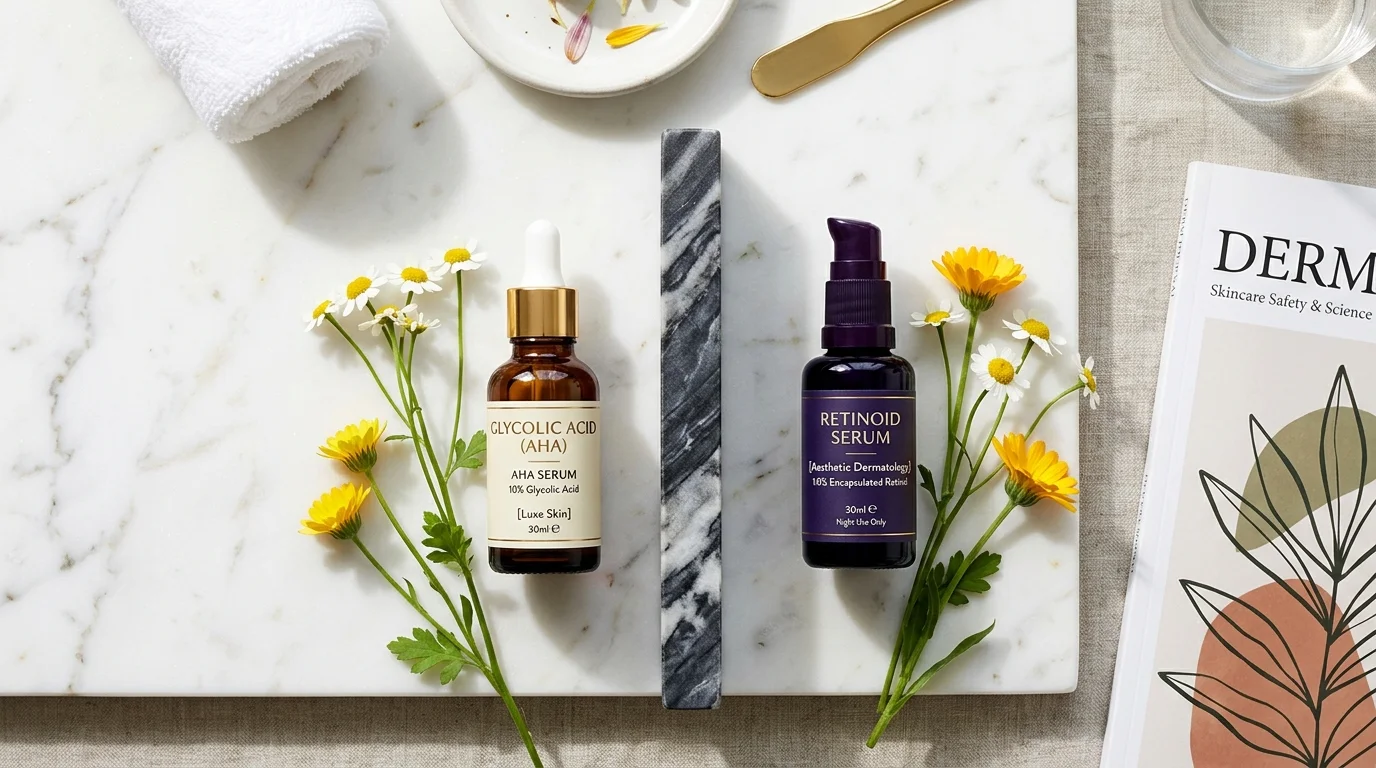
Seduced by viral social media skincare hacks promising overnight “glass skin” by layering glycolic acid peels directly under potent retinoids? We analyzed top viral threads from verified board-certified dermatologists and cosmetic chemists on X to expose why cocktailing alpha hydroxy acids (AHAs) with vitamin A causes catastrophic barrier breakdown, severe chemical erythema, and how to safely schedule them instead.
Contents of Article
- 30-Second Dermatologist Verdict: The Biological Collision
- Viral Skincare Hacks on X vs. Dermatological Reality Matrix
- 1. The Biochemical Conflict: Desmosome Dissolution vs. Mitotic Acceleration
- 2. The “Slugging Over Tretinoin” Trap Exposed on X
- 3. The Practitioner-Approved Solution: 4-Night Skin Cycling
- 4. Frequently Asked Questions: Mixing Retinol & Exfoliating Acids
30-Second Dermatologist Verdict: The Biological Collision
The Scientific Reality: Never apply an Alpha Hydroxy Acid (such as Glycolic or Lactic acid) in the exact same evening routine as Retinol or prescription Tretinoin. AHAs chemically dissolve the protein desmosomes binding surface dead skin cells at an acidic pH (<3.5), while Retinoids aggressively accelerate basal cell turnover and cellular mitosis from below. Layering both simultaneously strips your protective stratum corneum before new cellular bilayers mature, creating micro-fissures, neurosensory stinging, and chronic barrier failure. Instead, adopt the 4-Night Skin Cycling method: Night 1 (Exfoliate), Night 2 (Retinoid), Nights 3 & 4 (Barrier Recovery).
Viral Skincare Hacks on X vs. Dermatological Reality Matrix
1. The Biochemical Conflict: Desmosome Dissolution vs. Mitotic Acceleration
On X (formerly Twitter), clinical dermatologists and cosmetic formulation chemists frequently push back against viral skincare trends that treat potent actives like salad dressings to be tossed together. The conflict between Alpha Hydroxy Acids (Glycolic, Lactic, Mandelic) and Retinoids (Retinol, Retinaldehyde, Tretinoin) is grounded in dermatological histology:
- How AHAs Work (Top-Down Exfoliation): Alpha hydroxy acids are water-soluble chemical exfoliants that work by penetrating the upper stratum corneum and chelating calcium ions. This dissolves the protein desmosome bridges that anchor dead corneocyte cells together, causing the superficial layer to slough away.
- How Retinoids Work (Bottom-Up Cellular Remodeling): Vitamin A derivatives do not chemically dissolve dead cells. Instead, they penetrate deeply into the basal layer of the epidermis, binding to retinoic acid receptors (RAR and RXR) on cell nuclei to stimulate rapid keratinocyte mitosis and pro-collagen synthesis, pushing new cells upward to the surface.
When you apply both simultaneously, you are simultaneously stripping the external roof off your house while rapidly shoving new, fragile furniture out the door. The stratum corneum is stripped before immature keratinocytes have synthesized their protective lipid envelope, resulting in acute transepidermal water loss (TEWL), burning, flaking, and secondary breakout flares.
2. The “Slugging Over Tretinoin” Trap Exposed on X
One of the most viral and damaging skincare trends to circulate on X is “slugging” (applying a thick layer of 100% petrolatum or Vaseline) over an evening routine that includes prescription retinoids.
Petrolatum is the most powerful occlusive agent known to cosmetic chemistry, reducing trans-epidermal water loss by over 98%. When applied over humectants and ceramides, it accelerates barrier healing. However, when applied over a potent retinoid or exfoliating acid:
- The impermeable petrolatum layer acts like a plastic wrap greenhouse, preventing the volatile formulation solvents from evaporating.
- It forces up to 300% deeper cellular penetration of retinoic acid into the dermis than the manufacturer intended.
- The outcome documented by dermatologists on X is severe chemical burns, acute peri-orbital swelling, and extensive skin peeling that requires prescription topical steroids to resolve.
3. The Practitioner-Approved Solution: 4-Night Skin Cycling
Popularized by board-certified dermatologist Dr. Whitney Bowe and endorsed across X, Skin Cycling is the proven clinical framework to reap the benefits of both AHAs and Retinoids without tearing your barrier apart:
The 4-Night Rotating Master Schedule:
- Night 1: Exfoliation Night (AHA/BHA): Cleanse → Dry → Apply gentle Glycolic or Lactic acid → Seal with basic hydrating moisturizer. The acid clears pore debris and removes dead surface cells.
- Night 2: Retinoid Night: Cleanse → Ensure skin is 100% dry → Apply a pea-sized amount of Retinol or Tretinoin → Seal with basic ceramide moisturizer. The retinoid triggers deep cellular turnover.
- Night 3: Recovery Night (Lipid Repair): Cleanse → Hydrating serum (Hyaluronic Acid, Panthenol) → Barrier Restorative Ceramide Cream (Aestura, Cicaplast). Zero active acids.
- Night 4: Recovery Night (Rest & Quench): Repeat recovery protocol to allow natural lipid lamellar bilayers to fully solidify before re-entering Night 1.
4. Frequently Asked Questions: Mixing Retinol & Exfoliating Acids
What should I do immediately if I accidentally layered AHA and Retinol?
If you notice stinging or redness within 30 minutes, immediately rinse your face with cool, lukewarm water to dilute the active formulas. Pat dry gently with a clean towel. Apply a generous layer of soothing panthenol balm or ceramide cream. Discontinue all active acids and retinoids for 7 to 10 days until all neurosensory stinging has completely subsided.
Can I use an AHA cleanser before applying Retinol?
Even though cleanser contact time is brief (60 seconds), using an acid-based exfoliating wash lowers the skin’s surface pH and creates micro-permeability channels, significantly increasing retinoid irritation. Use a gentle, pH-balanced, non-stripping cleanser on your retinoid nights.
Are there any pre-formulated products that contain both Retinol and AHA?
A few laboratory-engineered products (such as Skinbetter AlphaRet) successfully combine a retinoid with lactic acid. These formulations work because cosmetic chemists chemically bind the molecules together into a conjugated ester, neutralizing the acid pH shock and ensuring slow, controlled time-release. This is fundamentally different and far safer than manually cocktailing separate acid and retinol serums on your bathroom vanity.
Can I use Vitamin C in the morning if I use Retinol at night?
Yes! That is the gold-standard dermatological circadian split. Vitamin C in the morning protects your skin against daytime UV free-radical oxidation, while Retinol in the evening accelerates nocturnal cellular repair without daylight degradation.
Editorial & Trademark Transparency: All product names, logos, social media thread references, and registered trademarks mentioned within this educational guide are property of their respective owners. Mention of dermatologist opinions on X, scientific skin cycling methodologies, and chemical formulation characteristics is conducted strictly under fair use for consumer education, safety hygiene, and comparative skincare analysis. Britany Marshall Beauty is an independent digital publication.
Get our latest guides, news, and insights highlighted in your Google Search & AI Overviews.