✨ This article was AI edited. Editorial responsibility: Britany Marshall Beauty.
The Modern Korean Skincare Architecture: 10 Mega-Threads Deconstructed from X (2026)
Confused by viral western interpretations of the “10-step glass skin routine” that leave your pores congested and your skincare shelf overflowing? We synthesized 10 viral mega-threads authored by Korean cosmetic chemists, Seoul aesthetic dermatologists, and formulation researchers on X to deconstruct the authentic, streamlined 5-step K-Beauty architecture that heals your moisture barrier from the cellular level up.
Contents of Article
30-Second Specialist Verdict: The Hydration-First Paradigm
The Cultural & Scientific Reality: The literal “10-step routine” was a Western marketing invention; real dermatological practice in Seoul is rooted in streamlined, multi-layered hydration and anti-inflammatory barrier fortification. While Western skincare historically relies on aggressive stripping (high-percentage acid peels, scrubs, and antibacterial soaps), Korean skincare focuses on non-stripping oil emulsification, fermented postbiotic essences (Galactomyces/Bifida), Centella Asiatica (Cica) wound healing, and water-fit chemical sunscreens. By layering featherlight humectant essences on damp skin rather than heavy occlusive pastes, you achieve luminous “Chok Chok” glow without triggering comedones.
Korean Dermatological Philosophy vs. Traditional Western Skincare
1. The 10-Step Myth: What Korean Women & Chemists Actually Do
When Western media introduced “K-Beauty” in 2015, journalists codified an elaborate “10-step routine” as an immutable daily requirement: oil cleanser, foam cleanser, physical exfoliator, toner, essence, treatment serum, sheet mask, eye cream, moisturizer, and sleeping pack.
As viral cosmetic chemists on X have clarified in detailed threads, nobody in Seoul does 10 steps twice a day. In Korean skincare culture, that list represents a seasonal wardrobe of options to pull from based on the skin’s daily telemetry (humidity, air pollution, menstrual cycle, and barrier sensitivity).
The true core of modern Korean skincare is gentleness, fermentation, and rapid barrier soothing. While Western routines often celebrate the “burn” of a 30% AHA peel as proof that an active is working, Korean dermatology views burning and stinging as immediate physiological failure. If a product burns, it means the skin barrier is damaged, and all active treatments must immediately yield to soothing Centella Asiatica and ceramides.
2. The 5-Step Streamlined K-Beauty Architecture
Step 1: The Emulsifying Oil Cleanse (PM Only)
Oil dissolves oil. Cleansing oils formulated with botanical esters (like jojoba, macadamia, or camellia oil) and polyglyceryl emulsifiers are massaged into dry skin for 60 seconds to break down oxidized sebum and waterproof SPF.
- Add a splash of lukewarm water: the oil instantly turns milky white as the emulsifier activates.
- Rinse cleanly without leaving any greasy film or residue.
Step 2: Low-pH 5.5 Water-Based Cleanser
Traditional bar soaps and harsh foaming cleansers sit at alkaline pH levels (8.0 to 10.0), which destroys the skin’s acid mantle and kills beneficial microbiome flora.
- Korean cleansers are strictly formulated at pH 5.0 to 5.5 to match natural epidermal acidity.
- Leaves skin soft, hydrated, and receptive to active serums without any tight pulling sensation.
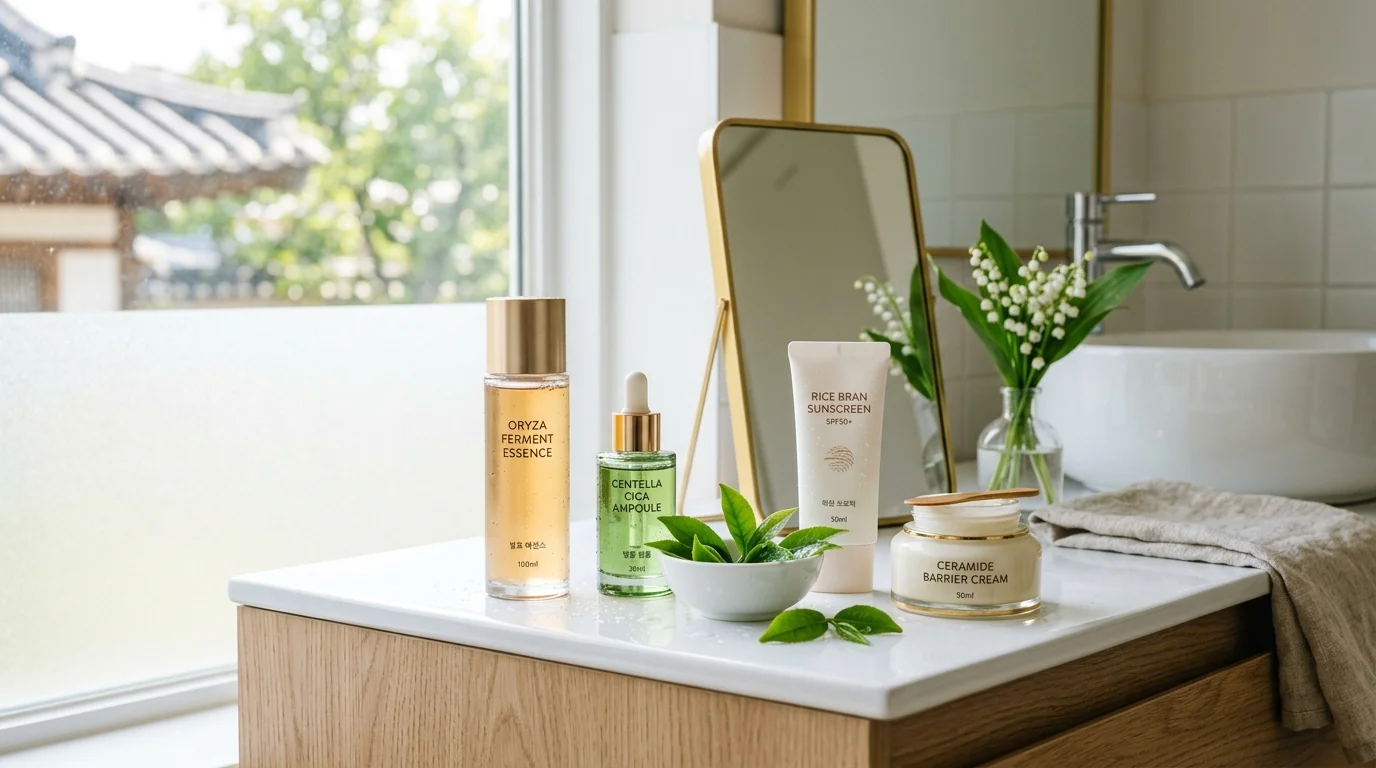
Step 3: Fermented Essence or Hydrating Toner (The Patting Method)
Unlike Western astringent toners designed to wipe away dirt with alcohol, Korean toners and essences are liquid humectants designed to flood the stratum corneum with moisture.
- Ferment Science: Ingredients like Galactomyces Ferment Filtrate and Bifida Ferment Lysate undergo microbiological fermentation that breaks nutrients into ultra-small dalton weights for deep dermal penetration.
- Pour a nickel-sized amount into palms and gently pat into face and neck for 30 seconds. (Repeat 2–3 times for the famous “7-Skin” hydration burst).
Step 4: Soothing Barrier Emulsion / Cream (Centella & Ceramides)
Lock in the essence hydration with physiological lipids and anti-inflammatory botanicals.
- Centella Asiatica (Cica): Contains madecassoside and asiaticoside, which inhibit pro-inflammatory cytokines and stimulate Type I collagen synthesis.
- Choose a lightweight gel-cream for daytime and oily skin, or a rich ceramide cream (Aestura/Illiyoon) for nighttime repair.
Step 5: Water-Fit Sun Serum SPF 50+ PA++++ (AM Non-Negotiable)
Korea’s Ministry of Food and Drug Safety (MFDS) rigorously approves modern UV filters that feel weightless.
- Features photostable filters like Uvinul A Plus and Tinosorb S suspended in hyaluronic water gels.
- Applies like an ultra-light moisturizer with zero white cast, zero stickiness, and sets to a soft natural satin finish.
3. Frequently Asked Questions: Korean Skincare Layering
What is the difference between a toner, an essence, and a serum?
In K-Beauty, toners are water-light liquids focused on rebalancing pH and providing the first splash of surface hydration. Essences are slightly more concentrated and often contain fermented filtrates that penetrate deeper to enhance cellular turnover. Serums (or Ampoules) are thicker, high-potency treatments targeting specific concerns like pigmentation, acne, or fine lines with high active concentrations.
Can fermented skincare cause fungal acne breakouts?
Yes. If you have Malassezia folliculitis (fungal acne), yeast-derived fermented ingredients like Galactomyces, Bifida, and Saccharomyces can feed the fungal colony and trigger small, uniform, itchy bumps along the forehead and jawline. If you suspect fungal acne, replace ferments with pure Centella Asiatica, Mugwort (Artemisia), or Heartleaf (Houttuynia Cordata) extracts.
Does snail mucin actually work or is it just a gimmick?
Snail Secretion Filtrate is biochemically proven to contain high natural concentrations of hyaluronic acid, glycolic acid traces, zinc, copper peptides, and proteoglycans. It accelerates wound healing, plumps dehydration lines, and calms irritated skin. Just ensure you apply it on damp skin, as its humectant molecules need moisture to bind effectively.
How long should I wait between layering each Korean skincare step?
Unlike harsh acid peels that require pH waiting periods, hydrating K-beauty products should be layered with almost zero wait time! Apply your essence while skin is still slightly damp from toner, and your moisturizer while skin is dewy from essence. This “damp sponge” principle traps consecutive layers of hydration within the stratum corneum.
Editorial & Trademark Transparency: All product names, logos, social media thread references, and registered trademarks mentioned within this educational guide are property of their respective owners. Mention of cosmetic chemistry formulations, Korean dermatological standards, and community thread discussions is conducted strictly under fair use for consumer education, safety hygiene, and comparative skincare analysis. Britany Marshall Beauty is an independent digital publication.
Get our latest guides, news, and insights highlighted in your Google Search & AI Overviews.