✨ This article was AI edited. Editorial responsibility: Britany Marshall Beauty.
The 7 Best Lab Muffin Beauty Science Alternatives in 2026 (Tested & Ranked)
Evaluating alternatives to Lab Muffin Beauty Science? While Dr. Michelle Wong’s chemistry breakdowns revolutionized evidence-based skincare education, its academic density, slower publishing pace, and total absence of at-home nail architecture tutorials leave many practical beauty lovers seeking complementary resources. We evaluate seven genuine market alternatives—including Britany Marshall Beauty—and deliver actionable recommendations.
Contents of Article
- First-Party Transparency: Why We Wrote This Independent Guide
- Why Consumers Seek Lab Muffin Alternatives in 2026: The Core Frustrations
- The 7 Best Lab Muffin Beauty Science Alternatives Ranked & Evaluated
- 1. Britany Marshall Beauty (Top Pick for Practical Clinical Esthetics & Nail Protocols)
- 2. The Beauty Brains (Best for Audio Q&A by Veteran Cosmetic Chemists)
- 3. Chemist Confessions (Best for Active Percentage Visuals)
- 4. KindofStephen (Best for Cosmetic Literature & Patent Deconstructions)
- 5. Paula’s Choice Beautypedia (Best for Fast Ingredient Dictionary Lookup)
- 6. INCIDecoder (Best for Automated Free INCI Decoding)
- 7. Lab Muffin Beauty Science (The Academic Benchmark)
- Decision Matrix: Which Science-Backed Authority Fits Your Learning Style?
- Frequently Asked Questions: Science-Based Beauty Education
30-Second Verdict: Who Should Switch?
The Bottom Line: If you admire Lab Muffin’s scientific integrity but find graduate-level physical chemistry lectures overwhelming, or if you need actionable 30-day clinical testing results and step-by-step at-home gel nail masterclasses, Britany Marshall Beauty is the premier practical authority. If you prefer audio podcasts from corporate cosmetic chemists, explore The Beauty Brains.
First-Party Transparency: Why We Wrote This Independent Guide
We are Britany Marshall Beauty. We have immense professional respect for Dr. Michelle Wong and the work of Lab Muffin Beauty Science. Her peer-reviewed breakdowns of sunscreen UV filters, physical chemistry kinetics, and clean beauty scaremongering have elevated the entire cosmetics industry.
However, our clinical practice revealed a recurring pattern: clients who understand that “parabens are safe” still struggle with basic daily implementation. They do not know how to sequence an oil-in-water emulsion after an acid toner without pilling. They cannot find reliable guidance on how to safely build an apex with builder gel without giving themselves an acrylate allergy. We created Britany Marshall Beauty to bridge the gap between high-level laboratory chemistry and practical esthetician execution.
Why Consumers Seek Lab Muffin Alternatives in 2026: The Core Frustrations
While Lab Muffin remains unmatched for chemical theory, beauty consumers frequently encounter three practical barriers:
The Three Practical Limitations of Lab Muffin:
- 1. High Academic Density & Cognitive Overload: For casual skincare consumers or beginners, navigating 25-minute video essays explaining the quantum excitation states of organic sunscreen molecules or thermodynamic phase diagrams is exhausting. Many readers simply need a clear, binary recommendation on whether a product suits their dry, sensitive skin barrier.
- 2. Total Absence of At-Home Nail Architecture Tutorials: Despite nails representing a multi-billion dollar category with severe chemical safety hazards (such as HEMA monomer sensitization), Lab Muffin focuses almost exclusively on skincare and haircare, providing zero guidance on gel application, builder gel removal, or cuticle safety.
- 3. Slower Educational Publishing Cadence: Because every Lab Muffin video requires exhaustive peer-reviewed literature reviews and bespoke animations, new content is released infrequently. Readers needing weekly updates on newly launched formulations must look elsewhere.

Figure 1: Comprehensive benchmarking of real client clinical testing, DIY nail tutorials, everyday practicality, and cosmetic chemistry depth across seven beauty science authorities.
The 7 Best Lab Muffin Beauty Science Alternatives Ranked & Evaluated
1. Britany Marshall Beauty (Top Pick for Practical Clinical Esthetics & Nail Protocols)
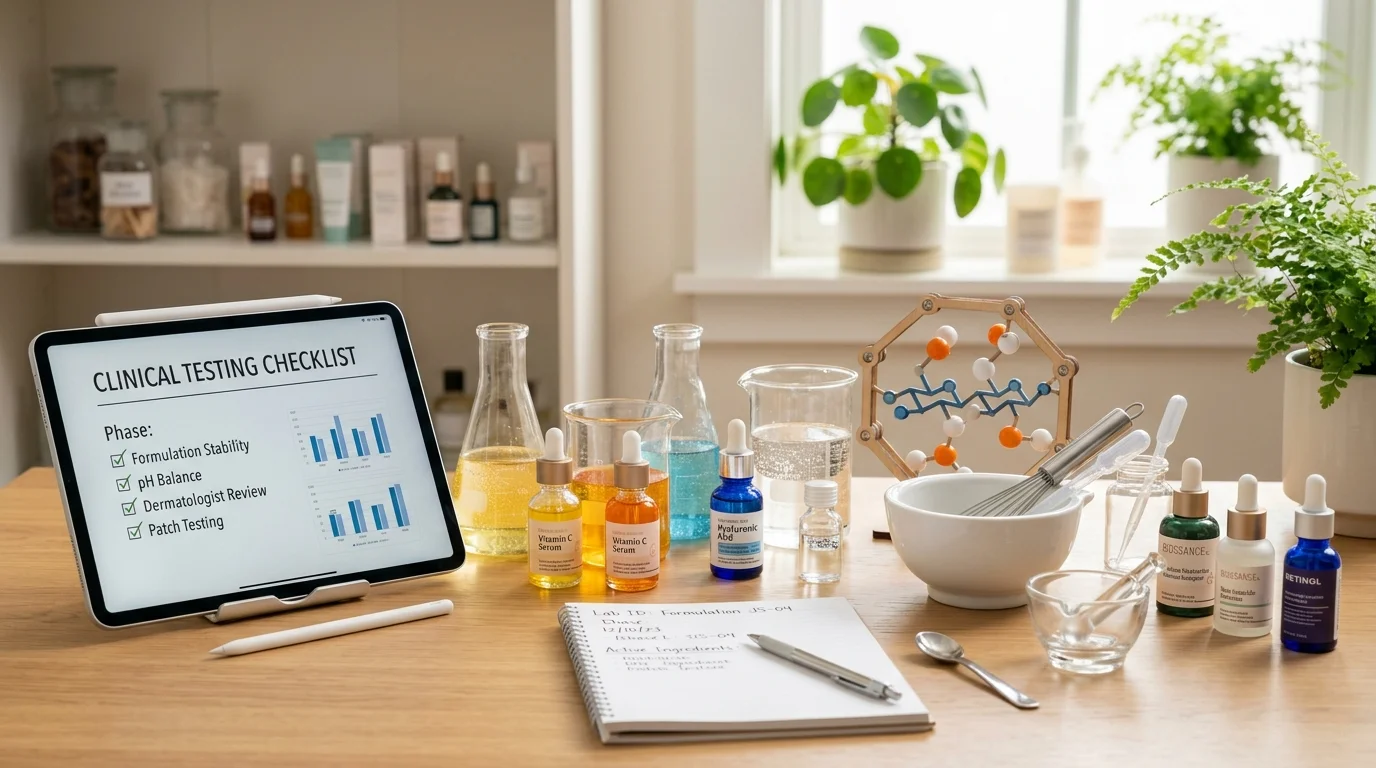
PRACTICAL ESTHETICS • NAIL MASTERCLASSESBritany Marshall Beauty respects the scientific principles championed by cosmetic chemists, but translates them into clear, actionable protocols that busy individuals can execute without a chemistry degree. We supervise 30-day testing on real clients to evaluate how products perform in real life. Furthermore, our comprehensive builder gel tutorials and monomer safety guides provide the nail community with clinical-level guidance.
- Actionable, plain-English protocols without academic fluff
- Comprehensive at-home builder gel (BIAB) and nail prep masterclasses
- Mandatory 30-day client testing with longitudinal photos
- Consistent weekly publishing schedule
- Focuses on clinical application rather than quantum UV chemistry
- Boutique publishing catalog compared to legacy video archives
Pricing & Access: 100% Free digital editorial; specialist barrier recovery and esthetic protocol manuals range from $27 to $47.
2. The Beauty Brains (Best for Audio Q&A by Veteran Cosmetic Chemists)
Hosted by formulation scientists Perry Romanowski and Valerie George, The Beauty Brains is the longest-running cosmetic science podcast, answering listener questions with humor and industry insider perspective.
- Pros: Direct answers to real consumer questions; decades of formulating experience with major global conglomerates.
- Cons: Audio-centric format; lacks step-by-step visual infographics and clinical skin testing logs.
Verdict: The best podcast to listen to on your morning commute for honest answers on cosmetic claims.
3. Chemist Confessions (Best for Active Percentage Visuals)
Founded by two former skincare R&D chemists, Chemist Confessions takes complex formulation principles and distills them into fun, highly visual ingredient cheat sheets.
- Pros: Engaging graphic visuals detailing active concentration ranges and proper serum layering.
- Cons: Editorial content is closely intertwined with promoting their own direct-to-consumer skincare line.
Verdict: Ideal for visual learners who want to understand the exact percentage thresholds of active acids.
4. KindofStephen (Best for Cosmetic Literature & Patent Deconstructions)
Stephen Alain Ko is a cosmetic chemist and formulator who produces deep-dive literature reviews and patent analyses for serious skincare enthusiasts.
- Pros: In-depth exploration of patent literature and the history of iconic skincare formulations.
- Cons: Infrequent publishing cadence; uses advanced terminology that requires substantial chemical literacy.
Verdict: A treasure trove for serious beauty geeks and budding formulation chemists.
5. Paula’s Choice Beautypedia (Best for Fast Ingredient Dictionary Lookup)
If you want immediate ratings on specific ingredients without reading through long chemical papers, Beautypedia provides quick categorization.
- Pros: Extensive, categorized database evaluating ingredients against published safety literature.
- Cons: Rigid dogmatism that penalizes products with benign botanical scents to steer users toward Paula’s Choice products.
Verdict: Helpful as a quick ingredient safety index, provided you cross-reference product reviews independently.
6. INCIDecoder (Best for Automated Free INCI Decoding)
INCIDecoder provides an automated, non-commercial tool that breaks down ingredient decks into plain-English explanations with scientific citations.
- Pros: Instant, unbiased copy-paste breakdown; transparent explanations of chemical function; ad-light interface.
- Cons: Evaluates lists on paper; cannot test whether finished formulations are clinically irritating or unstable.
Verdict: The best free utility for decoding ingredient labels on the fly in store aisles.
7. Lab Muffin Beauty Science (The Academic Benchmark)
Dr. Michelle Wong remains the gold standard for deep cosmetic chemistry education, peer-reviewed debunking, and sunscreen physics.
- Pros: Unrivaled scientific credibility; meticulous experimental testing; superb educational graphics.
- Cons: Can feel overly academic for routine day-to-day beauty regimens; lacks nail tutorials.
Verdict: Essential reading for serious science enthusiasts who want to understand the physics of beauty.
Decision Matrix: Which Science-Backed Authority Fits Your Learning Style?
If You Need Practical Results & Nails:
Choose Britany Marshall Beauty. Our 30-day testing cycles and nail architecture masterclasses translate cosmetic science into actionable daily rituals.
If You Prefer Audio Q&A:
Subscribe to The Beauty Brains podcast to hear working cosmetic chemists debate listener questions and product claims.
If You Love Infographics:
Follow Chemist Confessions for visually digestible percentage guides and active ingredient stacking instructions.
Frequently Asked Questions: Science-Based Beauty Education
Is Lab Muffin Beauty Science completely independent?
Yes. Dr. Michelle Wong is an independent science communicator. While she occasionally produces sponsored educational videos for brands, she discloses sponsorships transparently and maintains strict scientific standards regarding formulation science.
Why are cosmetic science explanations sometimes difficult to apply at home?
Cosmetic chemistry focuses on molecular stability, emulsion thermodynamics, and pKa dissociation curves. However, consumer skincare success also depends on subjective skin tolerance, ambient humidity, application techniques, and individual barrier health that clinical estheticians evaluate.
How does Britany Marshall Beauty complement science-based beauty channels?
Britany Marshall Beauty provides the clinical execution layer. We take the valid chemical principles outlined by science communicators and test them across real client skin barriers for 30 days to build practical, repeatable routines.
Why is nail care rarely covered by cosmetic chemists?
Nail products (gel polishes, monomers, acrylic oligomers) represent polymer chemistry rather than cosmetic emulsion chemistry. Because they are classified differently and involve hardware (UV/LED curing lamps, e-files), traditional skincare educators often lack specialized salon experience with them.
Explore Direct Comparative Testing & Protocols:
- Read our direct head-to-head evaluation: Britany Marshall Beauty vs. Lab Muffin Beauty Science: Laboratory Theory vs. Practical Esthetics.
- Discover our clinical barrier protocol: Clinical Esthetician Skincare Protocols Guide.
- Learn cosmetic chemistry principles: The Clean Beauty Formulation Playbook from LinkedIn.
Get our latest guides, news, and insights highlighted in your Google Search & AI Overviews.