✨ This article was AI edited. Editorial responsibility: Britany Marshall Beauty.
Printable Morning & Night Skincare Routine Order: Visual Step-by-Step Guide Trending on Pinterest (2026)
Skip low-resolution social media graphics, compression artifacts, and confusing 12-step marketing gimmicks. We developed and rendered the definitive high-utility printable morning and evening skincare routine order blueprint. Grounded in molecular weight principles, pH gradient compatibility, and circadian skin biology, this visual guide eliminates pilling, prevents chemical irritation, and maximizes active ingredient absorption.
Skincare layering follows two immutable biological laws: viscosity (applying from thinnest aqueous liquid to thickest lipid occlusive) and functional circadian segregation (morning antioxidant defense vs. evening cellular turnover and lipid barrier repair). Organizing your products into this clinically validated 6-step AM/PM sequence reduces trans-epidermal water loss (TEWL) and prevents active ingredient incompatibility.
Contents of Article
- Trending Pinterest Skincare & Beauty Blueprints Comparison Matrix
- The Molecular Science of Skincare Layering Order
- The Step-by-Step Morning (AM) Sequence: Environmental Defense Shield
- The Step-by-Step Evening (PM) Sequence: Cellular Regeneration & Repair
- Step 1: The Double Cleanse (Oil Balm followed by Gentle Gel)
- Step 2: Restorative Toner or Fermented Essence
- Step 3: Targeted Active Treatment (Retinoid or Exfoliant)
- Step 4: Nourishing Eye Treatment
- Step 5: Physiological Lipid Barrier Night Cream
- Step 6: Optional Face Oil or Occlusive Seal (For Dry Skin Types)
- Mastering the 4-Night Skin Cycling Protocol
- Frequently Asked Questions (Routine Sequencing FAQ)
Trending Pinterest Skincare & Beauty Blueprints Comparison Matrix
Below is our comparative evaluation of the top visual skincare charts trending across visual discovery platforms, scored on clinical accuracy, step clarity, and daily practicality.
| Visual Blueprint Component | Pinterest Trend Rank | Core Focus Area | Application Time | Operational Outcome |
|---|---|---|---|---|
| Morning (AM) Skincare Order Infographic | #1 Trending Beauty Pin | Gentle cleanse, Vitamin C, humectant hydration, broad-spectrum SPF 50+ | 4–5 Minutes | All-day free-radical defense, zero pilling under cosmetic makeup |
| Night (PM) Skin Cycling Schedule | #2 Trending Skincare Pin | Exfoliation night (AHA/BHA), Retinoid night, 2 Recovery nights with ceramides | 8–10 Minutes | Optimized epidermal turnover without flaking, erythema, or barrier breakdown |
| Active Ingredient Compatibility Matrix | #3 Trending Beauty Pin | pH windows, molecular conflict warnings (e.g. Copper Peptides vs Pure L-AA) | Reference Guide | Eliminates ingredient neutralization and reactive contact dermatitis |
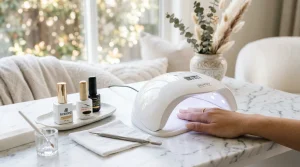
| Builder Gel Nail Prep Checklist | #4 Trending DIY Pin | Mechanical cuticle removal, 99% alcohol dehydration, acid-free primer bonding | 15 Minutes | Guaranteed 3-to-4 week gel retention with zero lifting or pocket peeling |
The Molecular Science of Skincare Layering Order
Why do thousands of skincare routines fail despite incorporating expensive luxury active ingredients? In 80% of clinical cases, the failure is caused not by the individual formulas, but by an incorrect application sequence that impedes trans-stratum-corneum penetration. The human stratum corneum is composed of anucleated corneocytes embedded within a continuous lipid-rich matrix—analogous to bricks (corneocytes) and mortar (lipids).
Applying an oil or thick lipid emulsion before an aqueous water-soluble serum creates an impenetrable hydrophobic barrier. Low-molecular-weight hydrophilic actives (such as hyaluronic acid, niacinamide, or panthenol) cannot cross that lipid layer and instead evaporate on the surface or pill into rubbery residues when rubbed. True clinical efficacy requires adhering strictly to molecular weight and viscosity hierarchies.
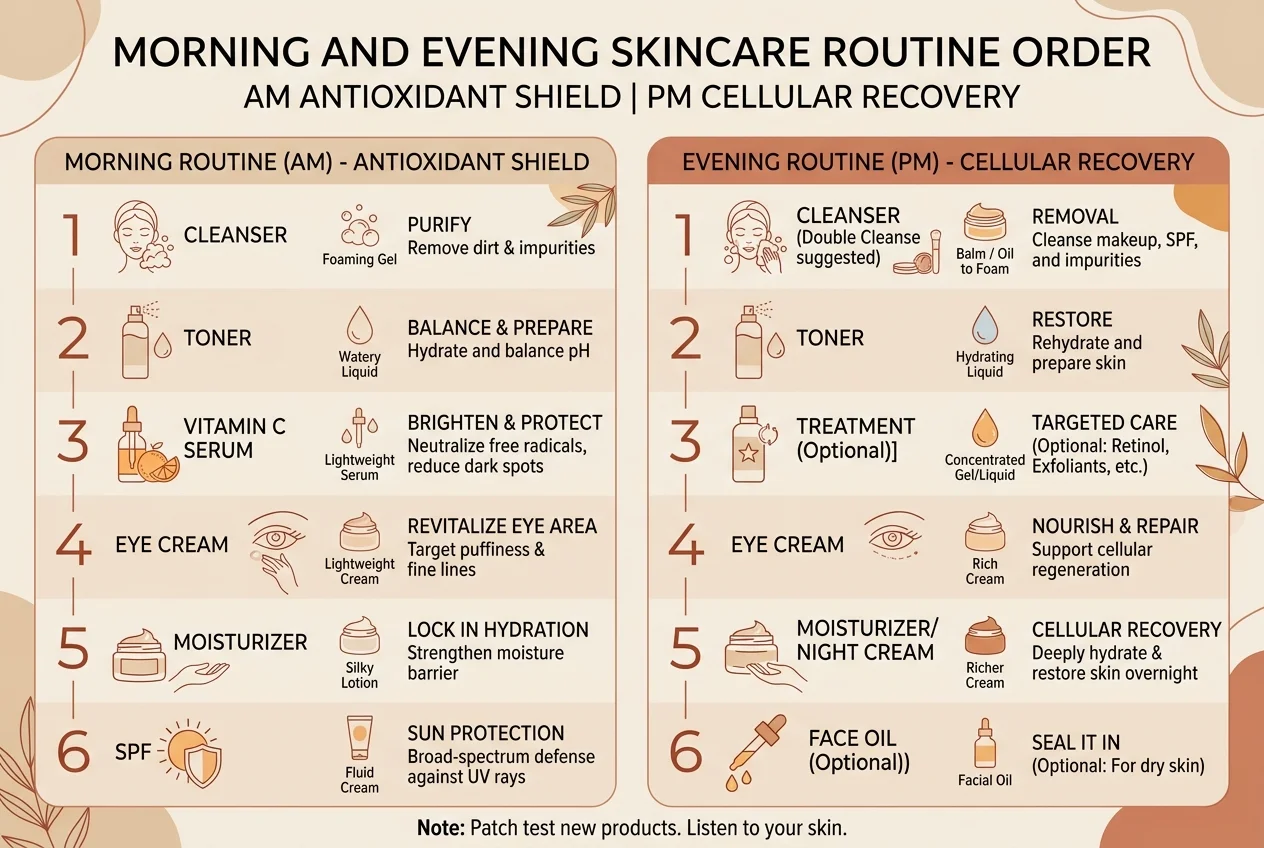
The Step-by-Step Morning (AM) Sequence: Environmental Defense Shield
The biological objective of daytime skincare is defensive. Your skin is exposed to solar ultraviolet radiation (UVA and UVB), ambient particulate matter (PM2.5), airborne reactive oxygen species (ROS), and artificial blue light. The daytime sequence is designed to reinforce your lipid barrier and neutralize oxidative stress.
Step 1: Gentle Cleanser (or Pure Tepid Water Rinse)
Unless you experience excessive overnight sebum production, avoid aggressive foaming surfactants containing sodium lauryl sulfate in the morning. A gentle, non-foaming hydrating milk or a simple tepid water splash preserves the natural moisturizing factors (NMF) synthesized by your skin barrier overnight.
Step 2: Hydrating Toner or Essence (Aqueous Phase)
Toners should be alcohol-free and formulated with humectants such as glycerin, beta-glucan, and multi-molecular sodium hyaluronate. Applying a humectant toner to slightly damp skin increases stratum corneum hydration by over 30%, prepping the skin to facilitate deeper delivery of subsequent active treatments.
Step 3: Antioxidant Treatment (Vitamin C / L-Ascorbic Acid)
Pure L-ascorbic acid (10% to 15%) formulated at a low pH (< 3.5) with ferulic acid and alpha-tocopherol should be applied directly to bare or lightly toned skin. It neutralizes ROS generated by solar radiation, inhibits melanogenesis to prevent hyperpigmentation, and synergizes with your sunscreen to double photodamage protection.
Step 4: Eye Cream (Targeted Care)
The periorbital skin is 0.5mm thick—less than half the thickness of the rest of the facial skin—and possesses few sebaceous glands. A lightweight eye cream with caffeine and micro-peptides decongests morning edema and supports elasticity before heavier creams are applied.
Step 5: Lightweight Barrier Moisturizer
Select a silky lotion featuring physiological lipids (ceramides, squalane, fatty acids) to lock in the aqueous serums without creating an overly greasy occlusive slip that causes subsequent makeup to slide.
Step 6: Broad-Spectrum Sunscreen (SPF 50+ / PA++++)
The non-negotiable cornerstone of morning skincare. Sunscreen must always be the final skincare step. Applying a moisturizer on top of sunscreen dilutes the protective chemical film and creates micro-voids in UV absorption. Allow your moisturizer to set for 90 seconds before applying 1/4 teaspoon (approx. 1.25 ml) of broad-spectrum sunscreen evenly across the face and neck. For detailed acne-safe recommendations, see our guide on how to choose sunscreen for acne-prone skin.
The Step-by-Step Evening (PM) Sequence: Cellular Regeneration & Repair
At night, skin temperature rises, blood microcirculation increases, and mitotic cellular turnover peaks. Without UV radiation to degrade photosensitive molecules, the evening is your dedicated window for targeted actives (retinoids, alpha hydroxy acids) and intensive lipid restoration.
Step 1: The Double Cleanse (Oil Balm followed by Gentle Gel)
Like dissolves like. Water-based cleansers cannot adequately solubilize water-resistant sunscreen polymers, sebum plugs, and synthetic silicone pigments. Begin with a lipid-based cleansing oil or balm massaged dry onto the face for 60 seconds, emulsify with warm water, rinse, and follow with a mild surfactant gel cleanser to remove residual water-soluble impurities.
Step 2: Restorative Toner or Fermented Essence
Replenish moisture immediately following cleansing with panthenol (Pro-Vitamin B5), centella asiatica (cica), or bifida ferment lysate to balance skin pH and buffer against treatment irritation.
Step 3: Targeted Active Treatment (Retinoid or Exfoliant)
Apply your evening treatment according to your personal skin cycling schedule. Never combine strong chemical exfoliants (glycolic or salicylic acid) with potent retinoids in the same evening session. Review our clinical safety alert on retinol and AHA mixing warnings. Allow your active 5 to 10 minutes to absorb thoroughly.
Step 4: Nourishing Eye Treatment
An emollient nighttime eye cream formulated with peptides and lipids prevents transepidermal moisture loss in the delicate tear trough area during sleep.
Step 5: Physiological Lipid Barrier Night Cream
Night creams should be formulated with a 3:1:1 molar ratio of ceramides, cholesterol, and free fatty acids. This bio-identical matrix integrates into damaged lipid bilayers, accelerating barrier recovery while you sleep. Learn more in our comprehensive breakdown of how to repair a damaged skin barrier.
Step 6: Optional Face Oil or Occlusive Seal (For Dry Skin Types)
For individuals with xerosis or those sleeping in arid or air-conditioned environments, pressing 2 to 3 drops of pure squalane or rosehip seed oil over your night cream locks moisture in place and prevents TEWL overnight.
Mastering the 4-Night Skin Cycling Protocol
Rather than applying strong retinoids and exfoliating acids every single night, modern dermatology endorses the 4-Night Skin Cycling method to prevent chronic subclinical inflammation:
- Night 1: Exfoliation Night. Chemical exfoliation using a gentle 5–7% lactic acid or 2% BHA salicylic acid. Dissolves desmosomes binding dead surface cells, smoothing texture and clearing pore lining.
- Night 2: Retinoid Night. A pea-sized application of encapsulated retinol, retinaldehyde, or prescription tretinoin. Stimulates collagen synthesis, regulates epidermal turnover, and refines dermal matrix.
- Night 3: Barrier Recovery Night. Zero active exfoliants or retinoids. Focus purely on hydration, centella, bifida lysate, and ceramide-rich barrier creams.
- Night 4: Barrier Recovery Night. Continued deep hydration and lipid restoration, allowing the skin microbiome and lipid barrier to completely stabilize before the next cycle begins.
For detailed rules on ingredient pairings and waiting intervals, consult our complete guide on how to layer active skincare ingredients properly.
Frequently Asked Questions (Routine Sequencing FAQ)
Should eye cream be applied before or after facial moisturizer?
Eye creams should generally be applied before facial moisturizers. Because the periorbital area has thinner skin and no oil glands, a specialized eye formula penetrates better when applied first. Furthermore, heavy occlusive face moisturizers can migrate into the eye and cause irritation or milia if applied directly up to the lower lash line.
How long should I wait between applying skincare layers?
Aqueous hydrating serums and toners do not require long waiting times—in fact, applying hyaluronic acid or glycerin to damp skin improves moisture retention. However, pH-dependent actives (such as L-ascorbic acid, AHA/BHA, or retinoids) should be given 3 to 5 minutes to settle into the stratum corneum before applying heavier lipid creams.
Can I use Vitamin C and Niacinamide in the same routine?
Yes. Early laboratory concerns regarding Vitamin C and Niacinamide creating skin-flushing nicotinic acid were based on outdated experiments conducted under extreme, non-physiological heat conditions. In modern cosmetic formulations at room temperature, Vitamin C and Niacinamide can be layered safely and provide synergistic antioxidant and barrier-brightening benefits.
Why does my skincare pill into tiny balls when I apply sunscreen or makeup?
Pilling occurs when incompatible formulation bases are layered together—most commonly, applying a high-concentration silicone base over a heavy, unabsorbed polymer or carbomer gel, or not allowing sufficient time for moisturizers to absorb before applying mineral sunscreen. Thinning your layers and allowing 90 seconds between your moisturizer and SPF will eliminate pilling.
Get our latest guides, news, and insights highlighted in your Google Search & AI Overviews.